Home
3.4
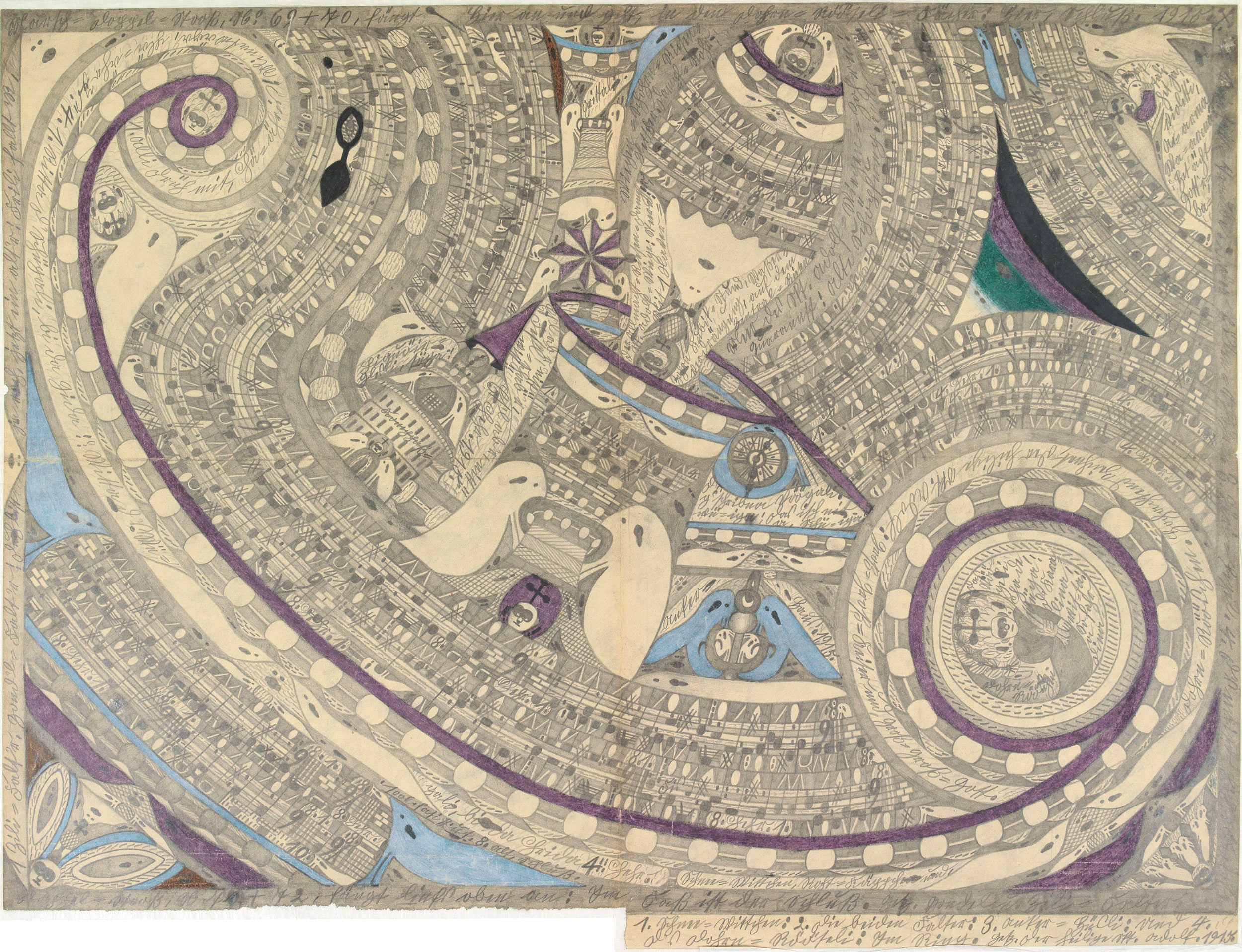
Der Allmacht=Riesen=Dampfer Skt. Adolf Wiege, 1915, Bleistift und Farbstift auf Zeitungspapier, 72,3 / 72,5 × 100,4 cm, A 9256-19 (XIII/p.83)
Aus: Geographische und allgebräische Hefte, Heft 13, S. 83
1.3
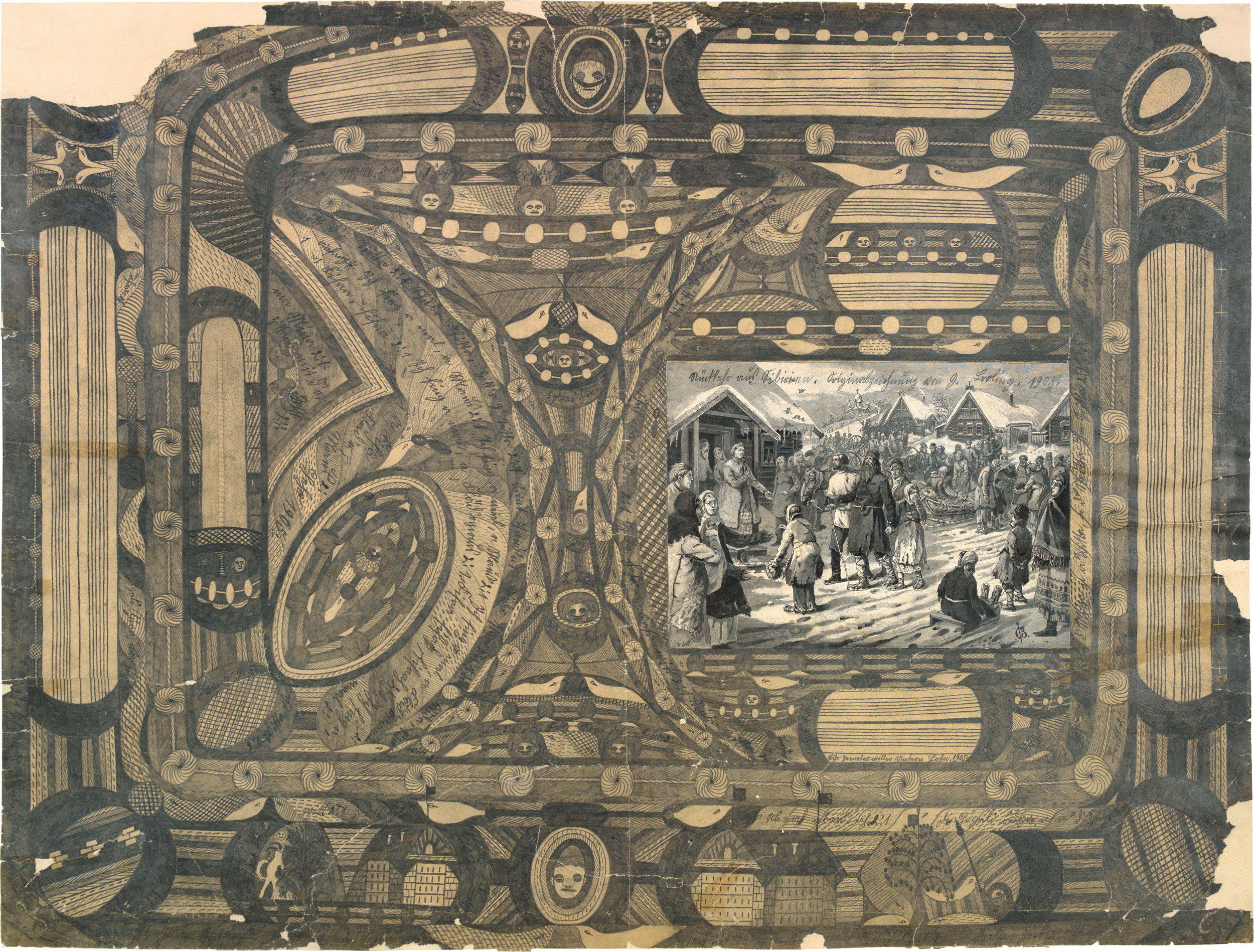
Rückkehr aus Sibirien, 1905, Bleistift auf Zeitungspapier, Collage, 74 × 99 cm, A 1972.242
Aus: Frühe Zeichnungen
4.7
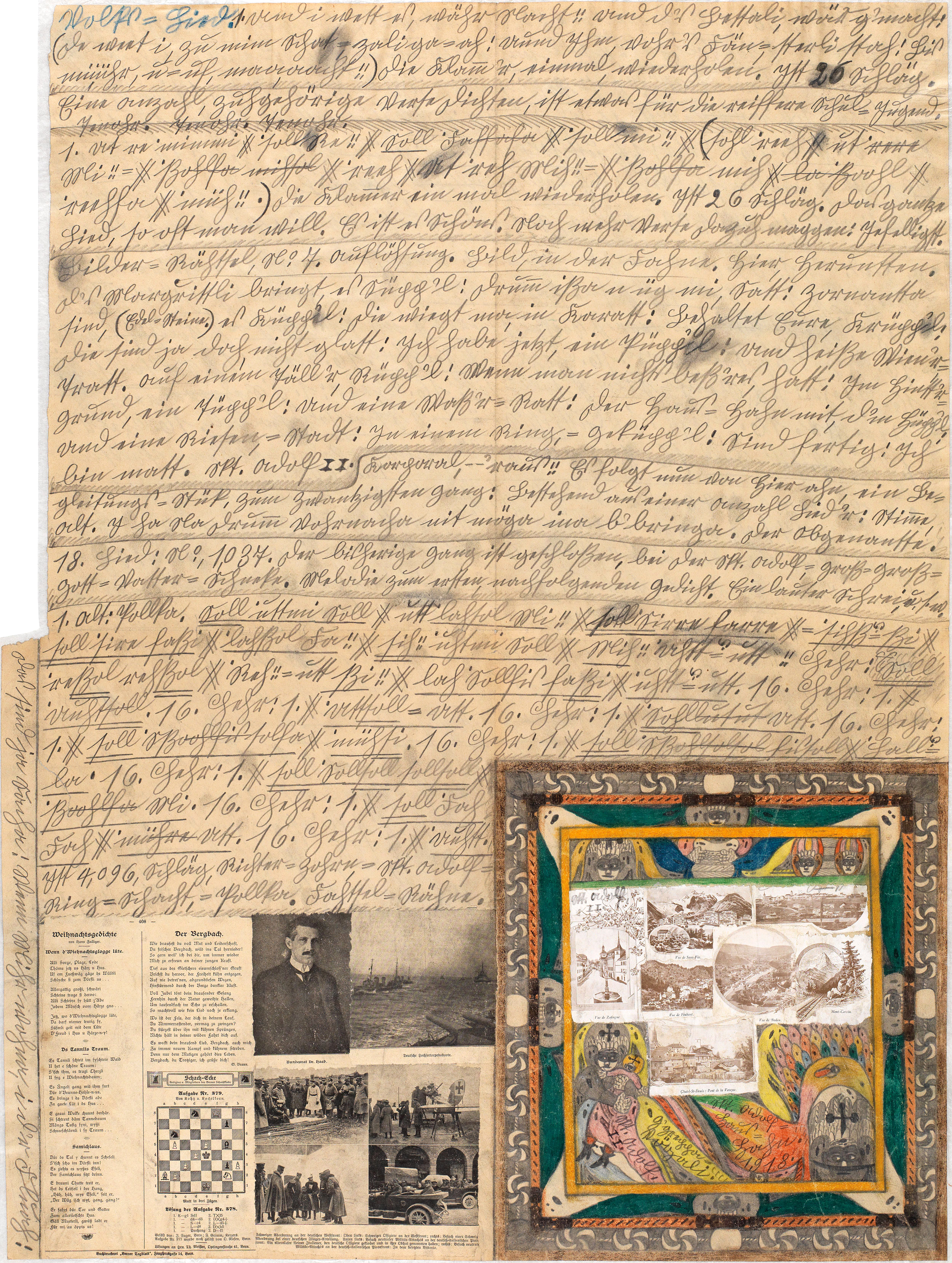
Greppa=Vögali. Skt.Adolf=Haus=Hahn, 1918, Bleistift, Farbstift und Collage auf Zeitungspapier, 99,4 × 71,2 / 71,9 cm, A 9294-118 (XV/p.957)
Aus: Hefte mit Liedern und Tänzen, Heft 15, S. 957
7.8
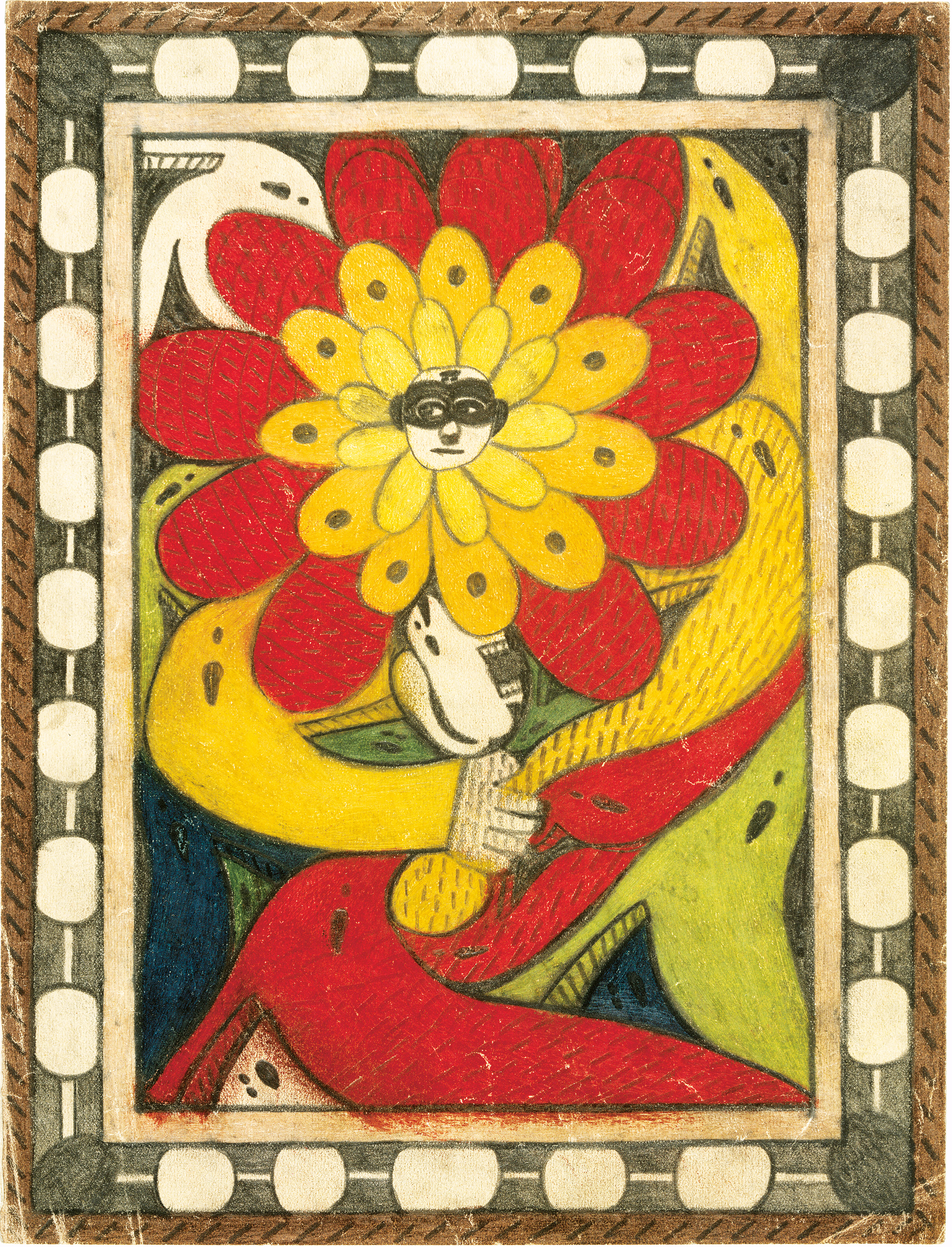
Skt.Adolf=Thron, = Flühe = Blume: Ditto/Schweiz/, 1917, Bleistift und Farbstift auf Papier, 28,9 × 21,8 cm, A 9281
Aus: Brotkunst
6.2
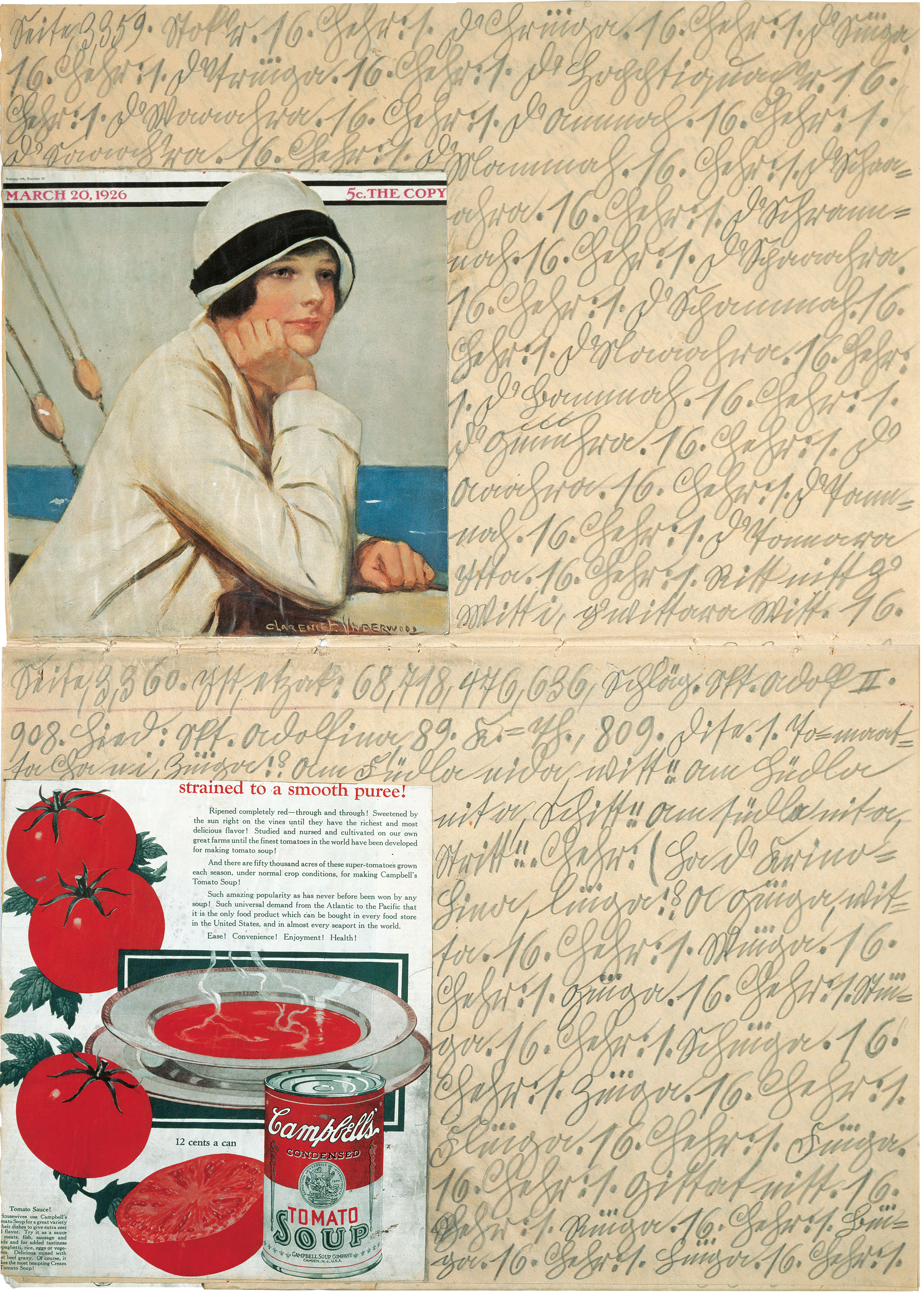
Ohne Titel (Campbell's Tomato Soup), 1929, Bleistift und Collage auf Zeitungspapier, 70 × 50 cm, A9404, S.3360
Aus: Trauer=Marsch, S. 3360
3.6
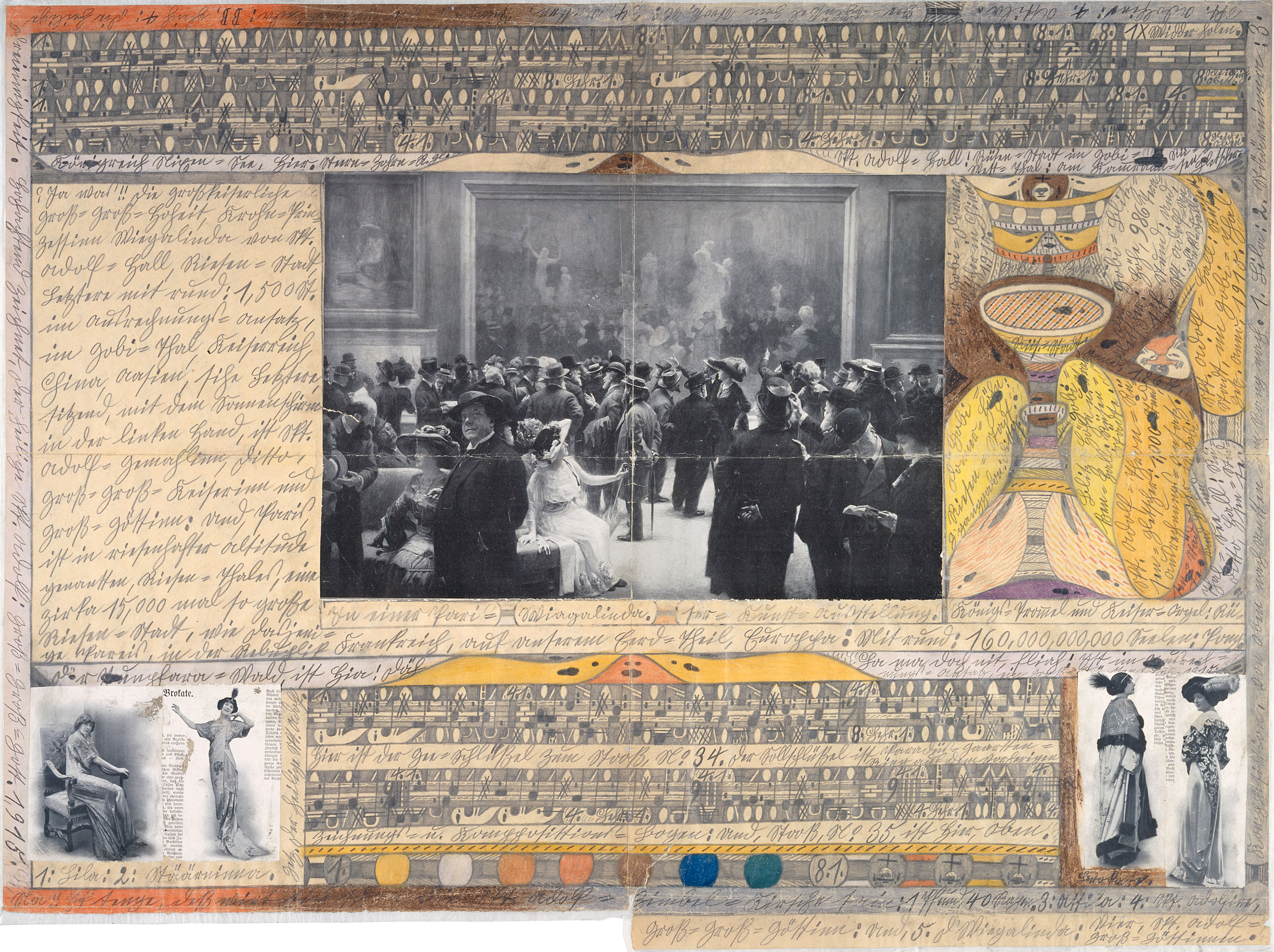
In einer Pariser=Kunst=Ausstellung., 1915, Bleistift und Farbstift auf Zeitungspapier, 100 × 72cm, A 9256-06 (XIII/p.31b)
Aus: Geographische und allgebräische Hefte, Heft 13, S. 31b
1.1
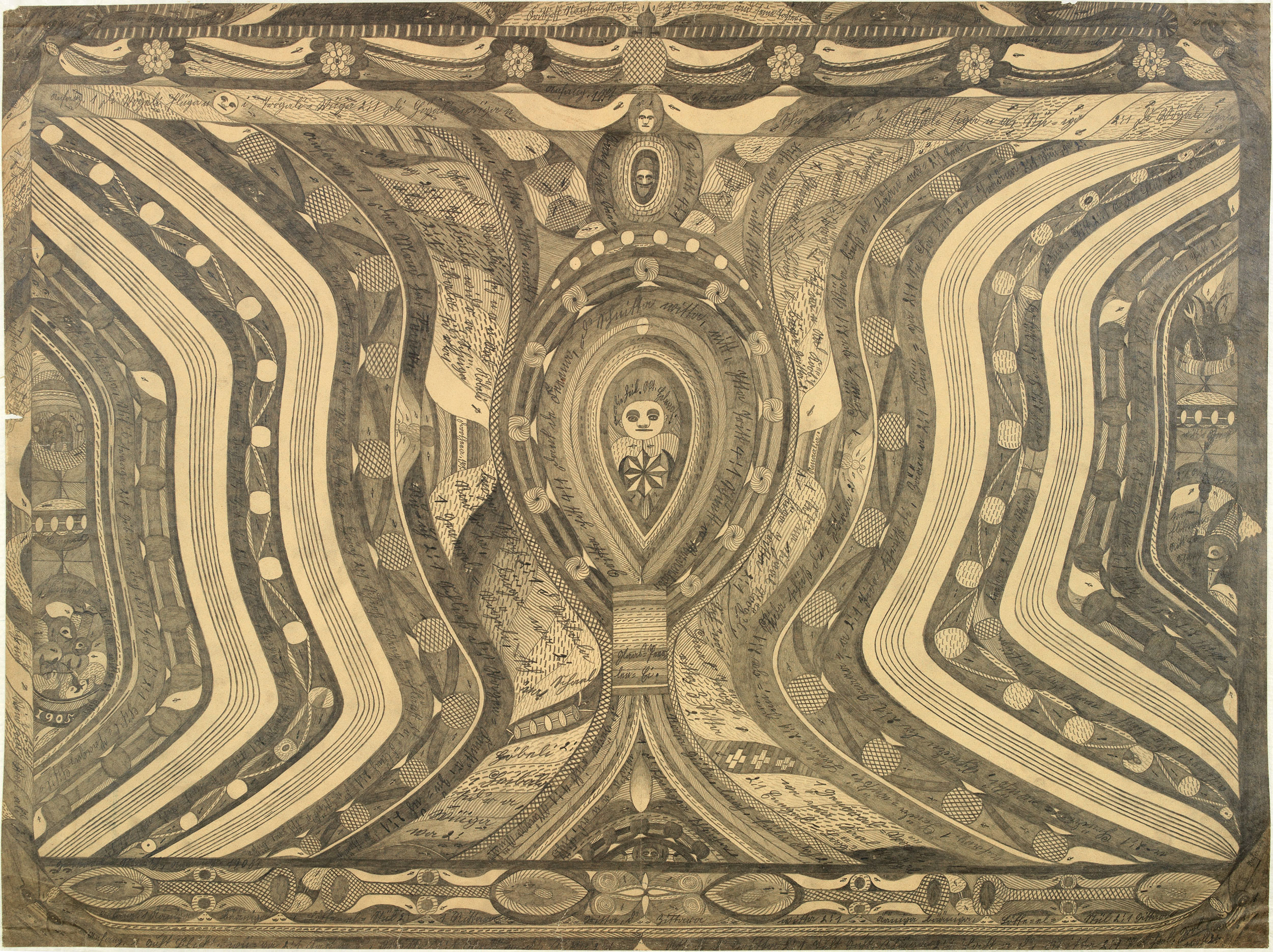
Glass=Peerlen=Ei, 1905, Bleistift auf Zeitungspapier, 73,5 × 99,6 cm, A 9227
Aus: Frühe Zeichnungen
1.5
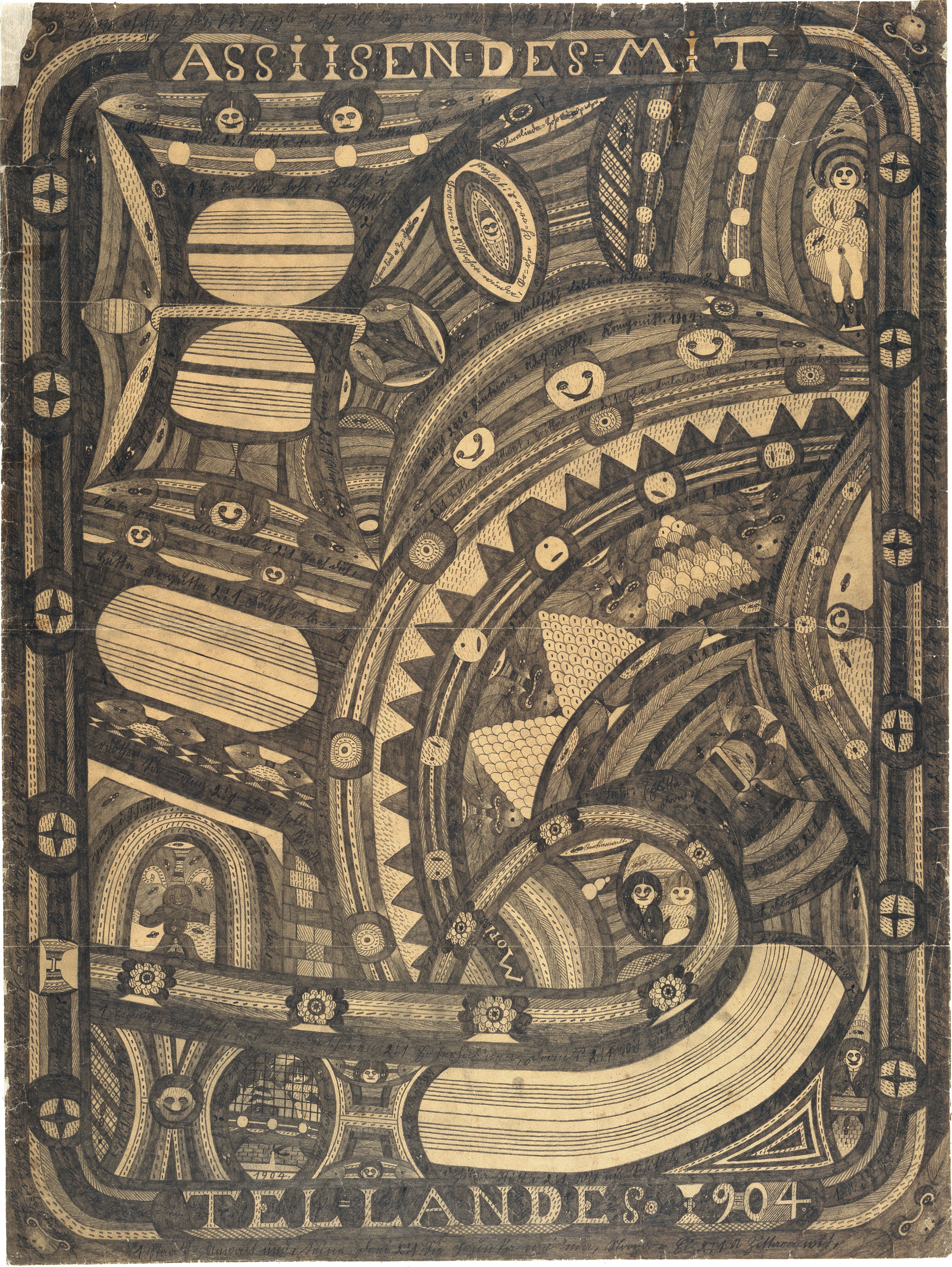
Assiisen=des=Mittel=Landes. Seite 12, 1904, Bleistift auf Zeitungspapier, 99,3 × 74,5 cm, A 9205
Aus: Frühe Zeichnungen
2.9
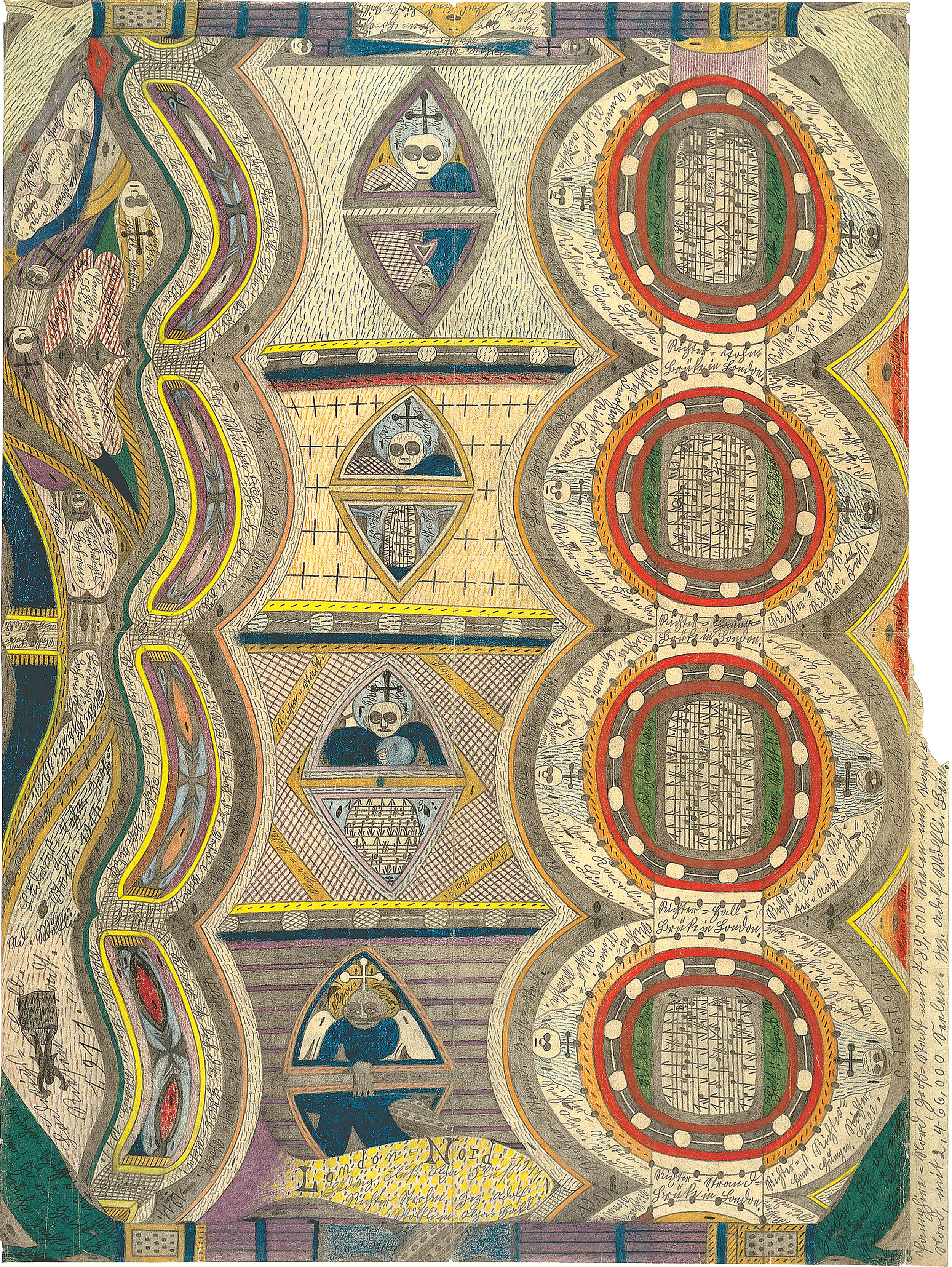
London=Nord, 1911, Bleistift und Farbstift auf Zeitungspapier, 99,7 × 71,7 cm, A 9243-76 (IV/p.403–404)
Aus: Von der Wiege bis zum Graab, Heft 4, S. 403–404
3.6
In einer Pariser=Kunst=Ausstellung., 1915, Bleistift und Farbstift auf Zeitungspapier, 100 × 72cm, A 9256-06 (XIII/p.31b)
Aus: Geographische und allgebräische Hefte, Heft 13, S. 31b
3.2
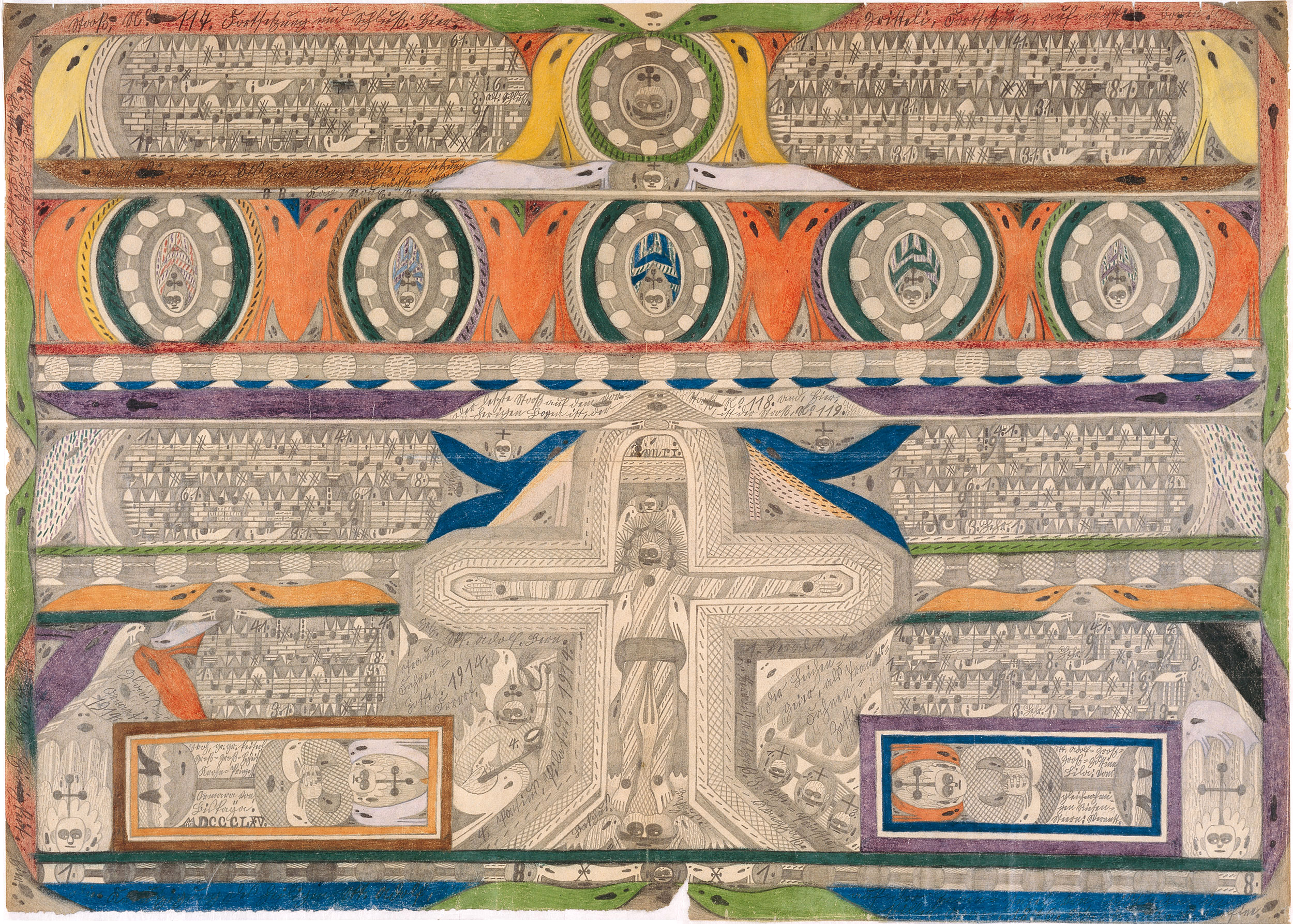
Gross=Gross=Gott=Vatter=Rooseli und Skt.Adolf. 64fach Stooss, No.2,193, bis und mit, Mutter=Zohrn,=64fach=Stooss No.2,384, 1915, Bleistift und Farbstift auf Zeitungspapier, 72 / 72,2 × 100 cm, A 9256-46 (XIII/p.23)
Aus: Geographische und allgebräische Hefte, Heft 13, S. 23
4.9
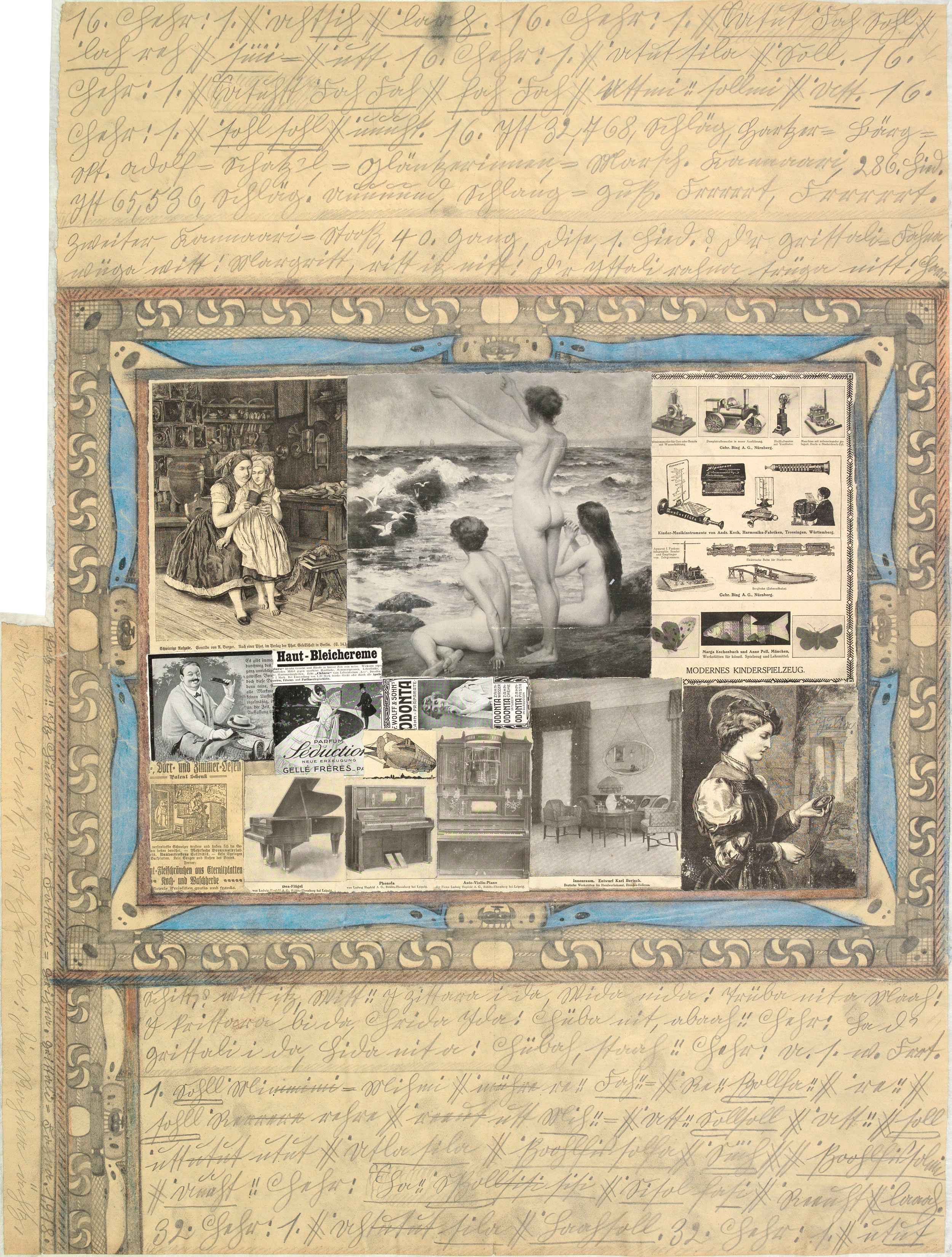
Julia. - Rattali=Grihna. Grittali=Fahne, 1918, Bleistift, Farbstift und Collage auf Zeitungspapier, 99,5 × 70 / 70,3 cm, A 9294-157 (XV/p.2755)
Aus: Hefte mit Liedern und Tänzen, Heft 15, S. 2755
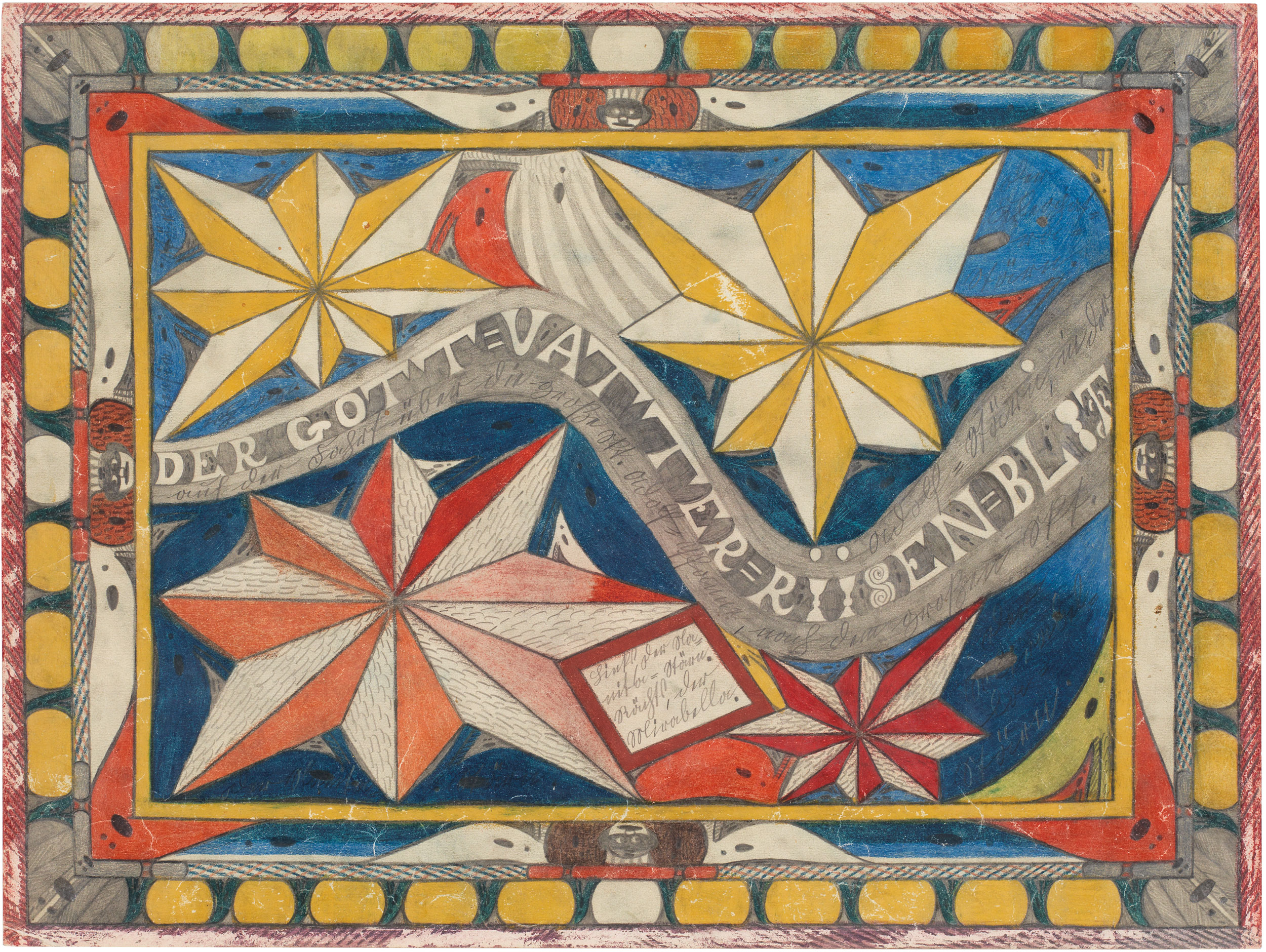
7.1
Der Gott=Vatter=Riisen=Blitz, 1919, Bleistift und Farbstift auf Papier, 51,2 × 68 cm, A 9311
Aus: Brotkunst
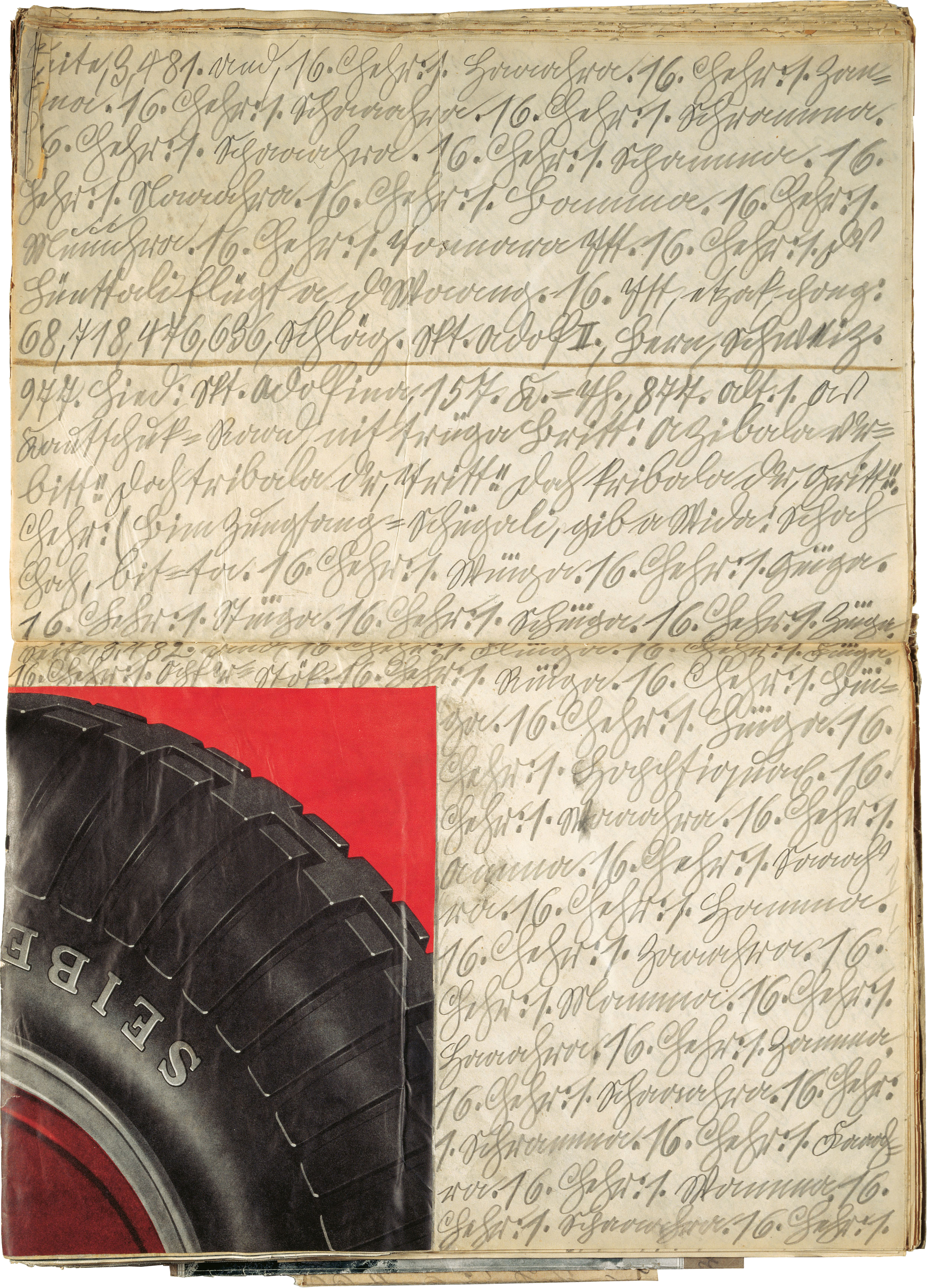
6.1
Ohne Titel (Rad), 1929, Bleistift und Collage auf Zeitungspapier, 70 × 50 cm, A9404, S.3481
Aus: Trauer=Marsch, S. 3481
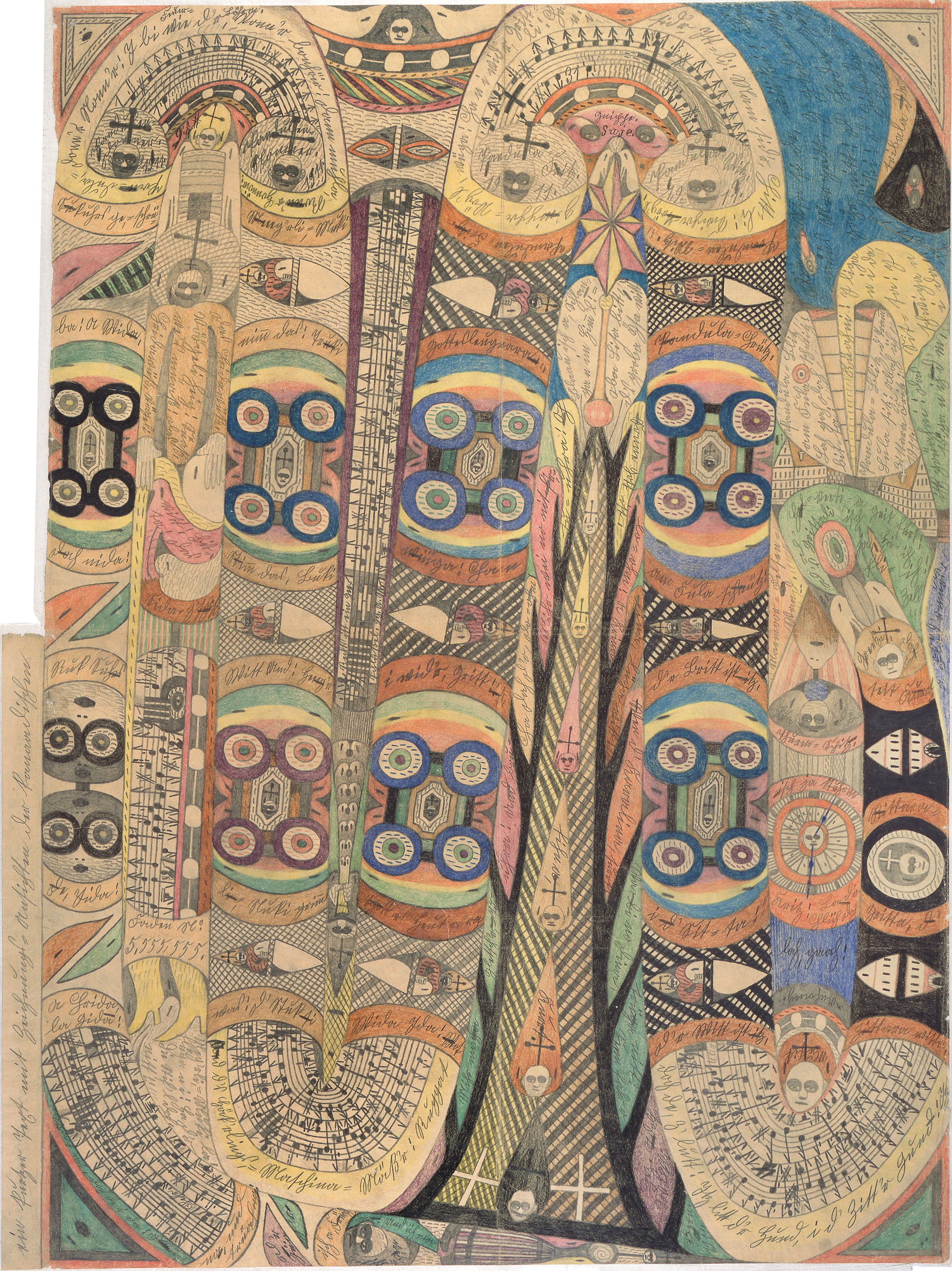
2.1
Gnippe Suje, 1911, Bleistift und Farbstift auf Zeitungspapier, 99,5 × 70,7 / 71,5 cm, A 9243-15 (IV/p.157–158)
Aus: Von der Wiege bis zum Graab, Heft 4, S. 157–158
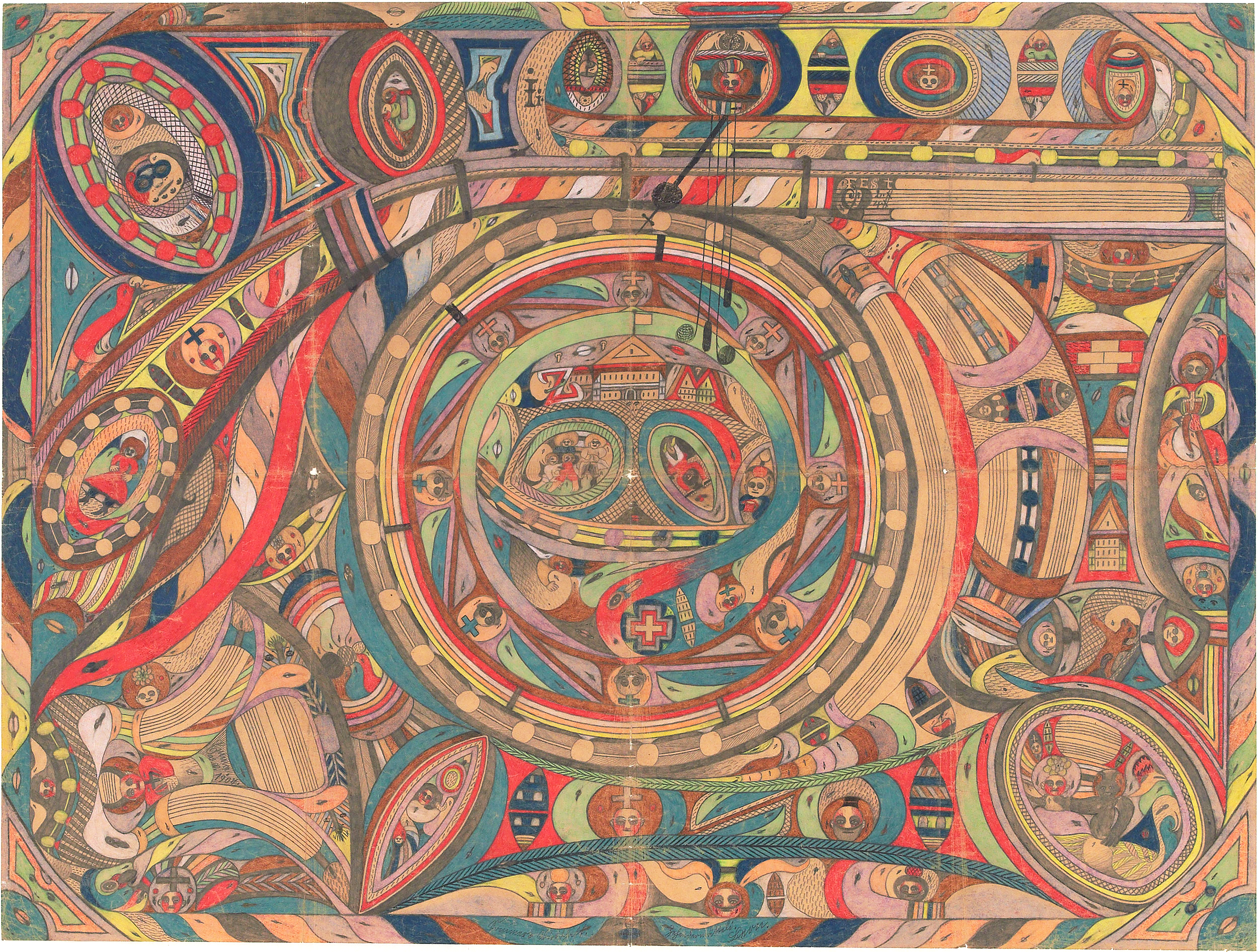
1.9
Sommer-Wirtschaft. Zehndermätteli. Bern, 1907, Bleistift und Farbstift auf Zeitungspapier, 74,5 × 99,5 cm, A 2012.114
Aus: Frühe Zeichnungen
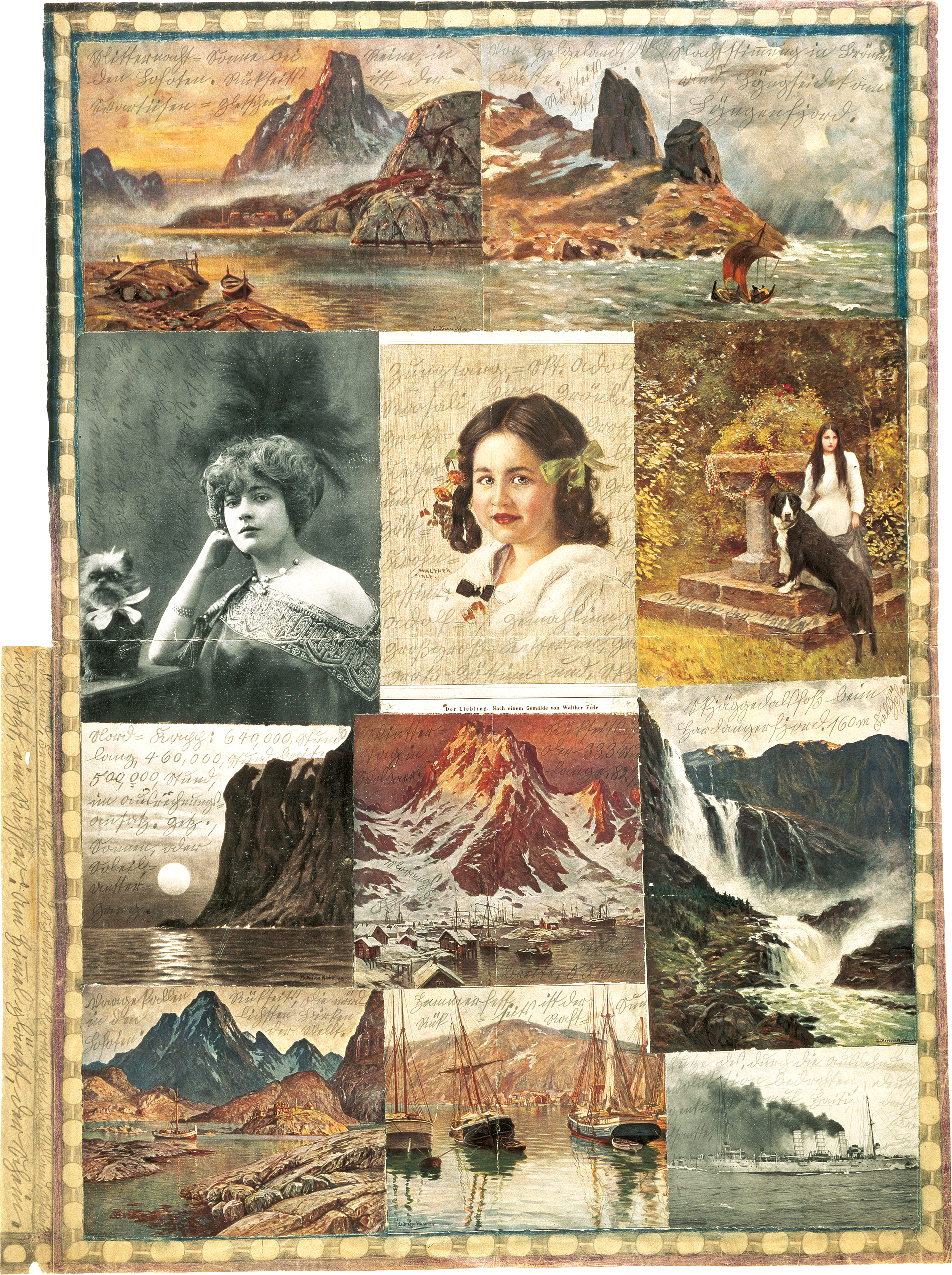
4.1
Z'ur Bayrische Gewerbeschau in München, 1917, Bleistift, Farbstift und Collage auf Zeitungspapier, 99,5 × 70,2 / 71,1 cm, A 9294-102 (XV/p.809)
Aus: Hefte mit Liedern und Tänzen, Heft 15, S. 809
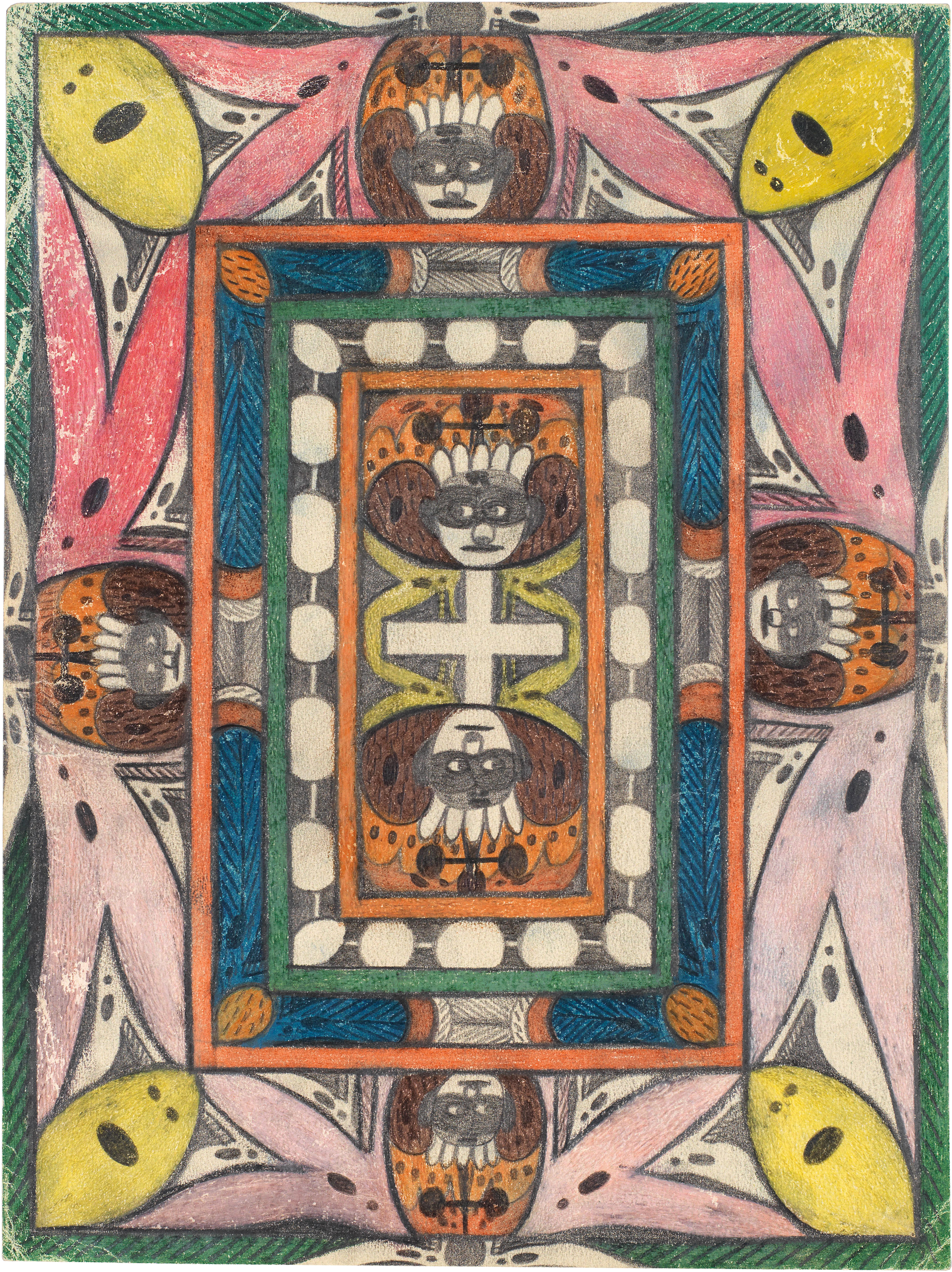
7.2
Japan=Süd=Hall, Skt. Adolf=Ring, 1920, Bleistift und Farbstift auf Papier, 25,5 × 34,2 cm, A 9073
Aus: Brotkunst
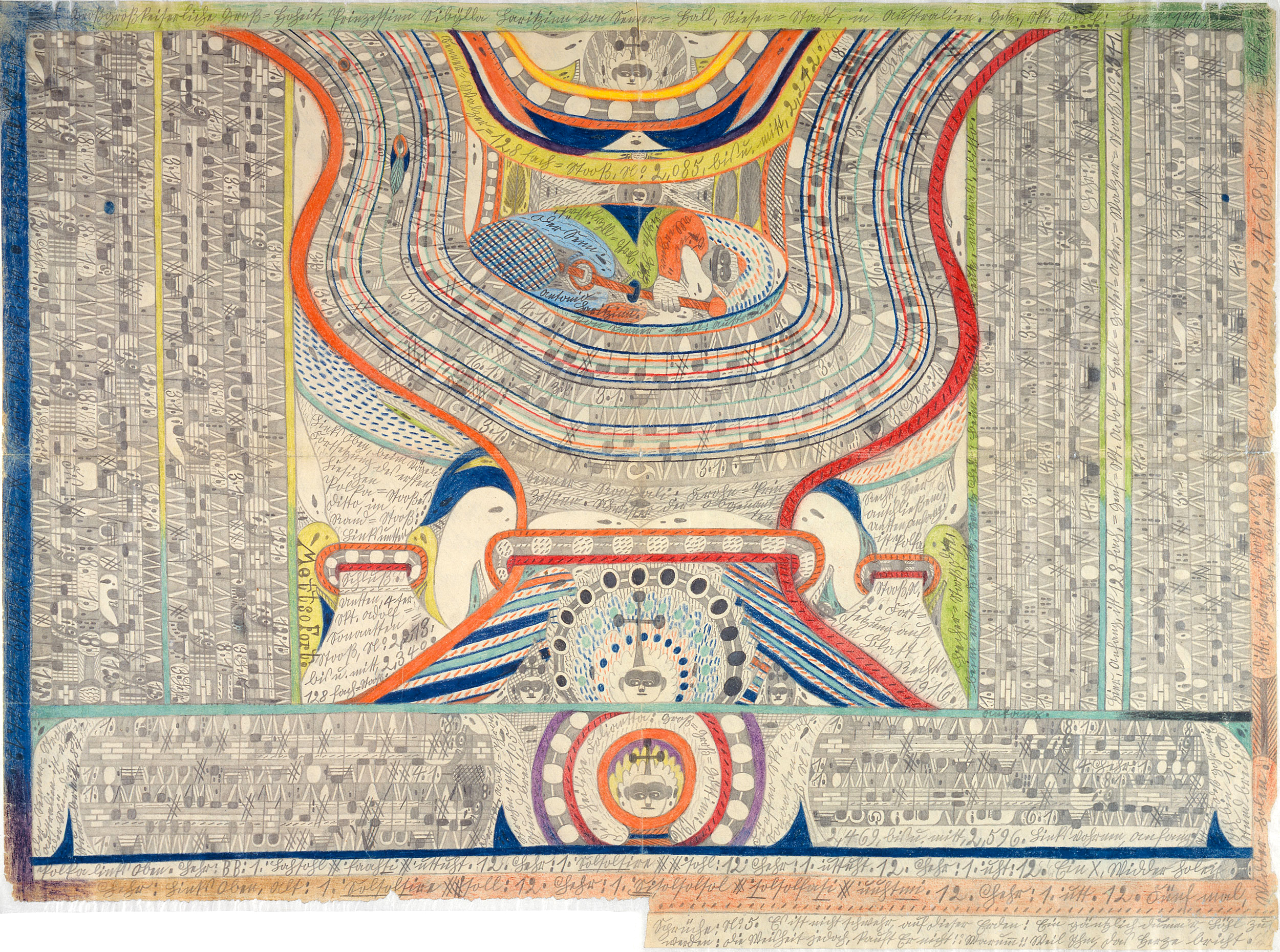
3.9
Sein Allergnädigste Gross=Gross=Majestät, Der Senn Antonio Baritzinn, 1916, Bleistift und Farbstift auf Zeitungspapier, 70,5 / 72 × 100,3 cm, A 9256-92 (XIII/p.823)
Aus: Geographische und allgebräische Hefte, Heft 13, S. 823
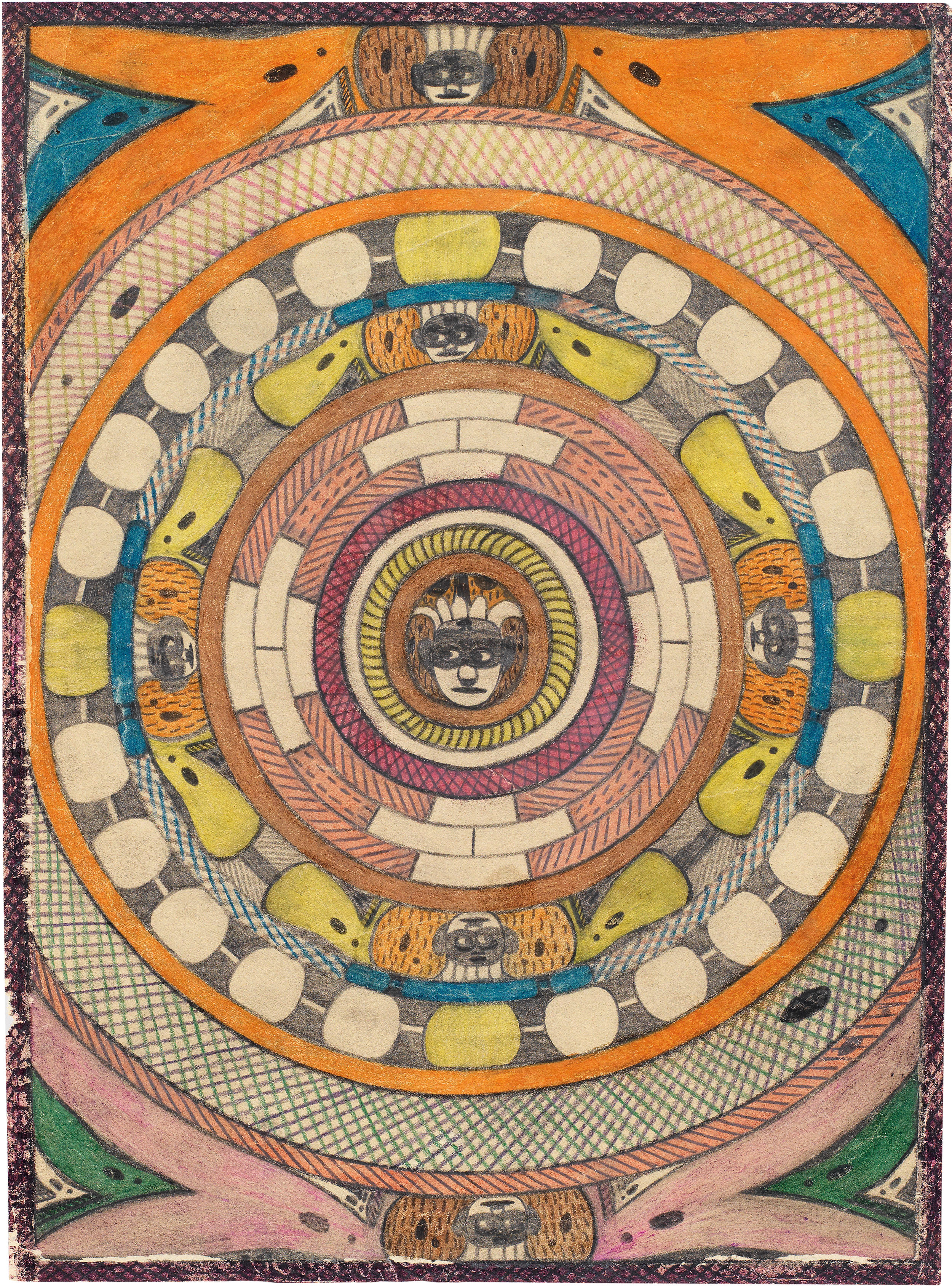
7.6
Japan=Thurm, [1920], Bleistift und Farbstift auf Papier, 45,3 × 32,5 cm, A 9335
Aus: Brotkunst
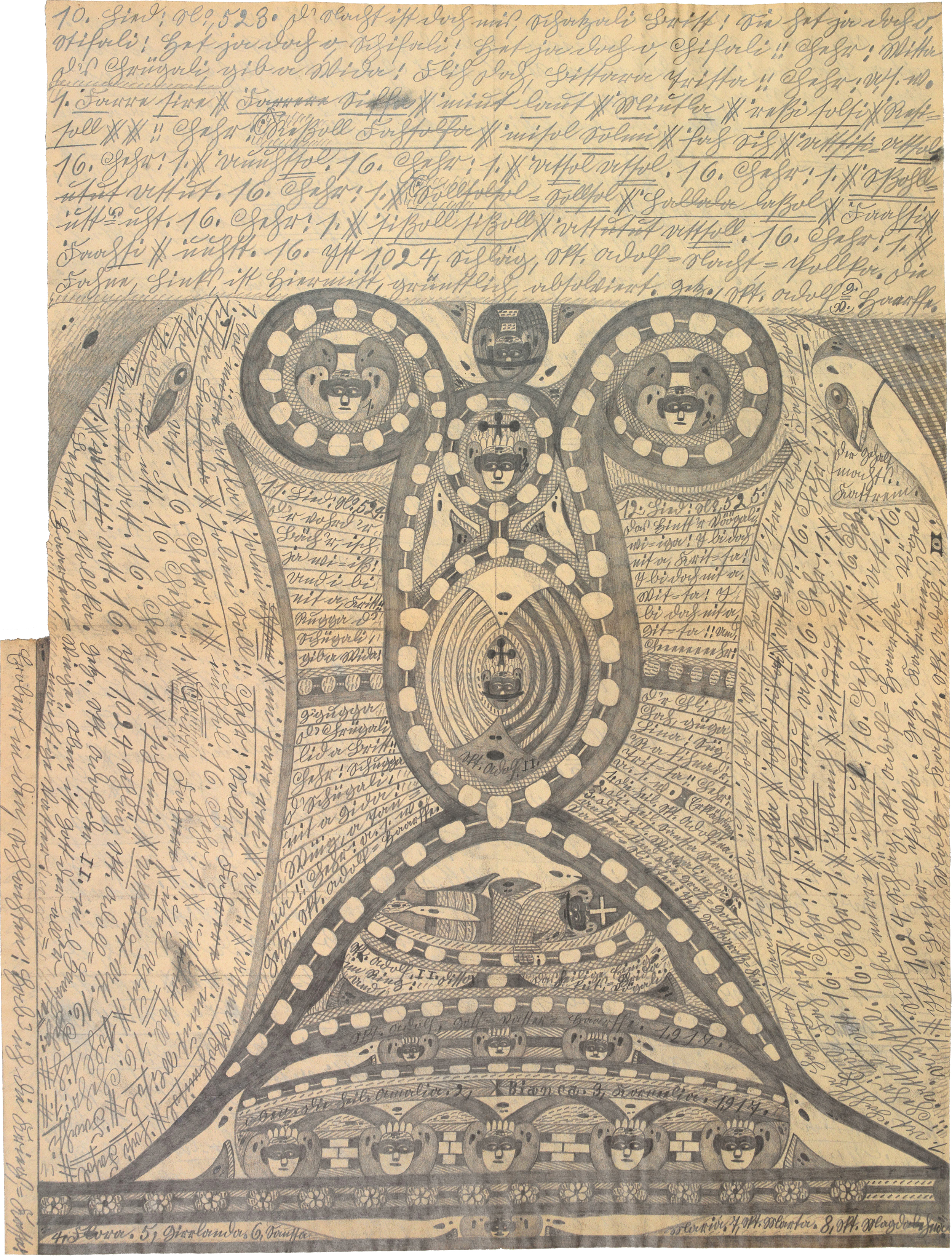
4.5
Skt. Adolf=Gott=Vatter=Haarfee., 1917, Bleistift und Collage auf Zeitungspapier, 99,6 × 71,2 / 72,5 cm, A 9294-69 (XV/p.577)
Aus: Hefte mit Liedern und Tänzen, Heft 15, S. 577
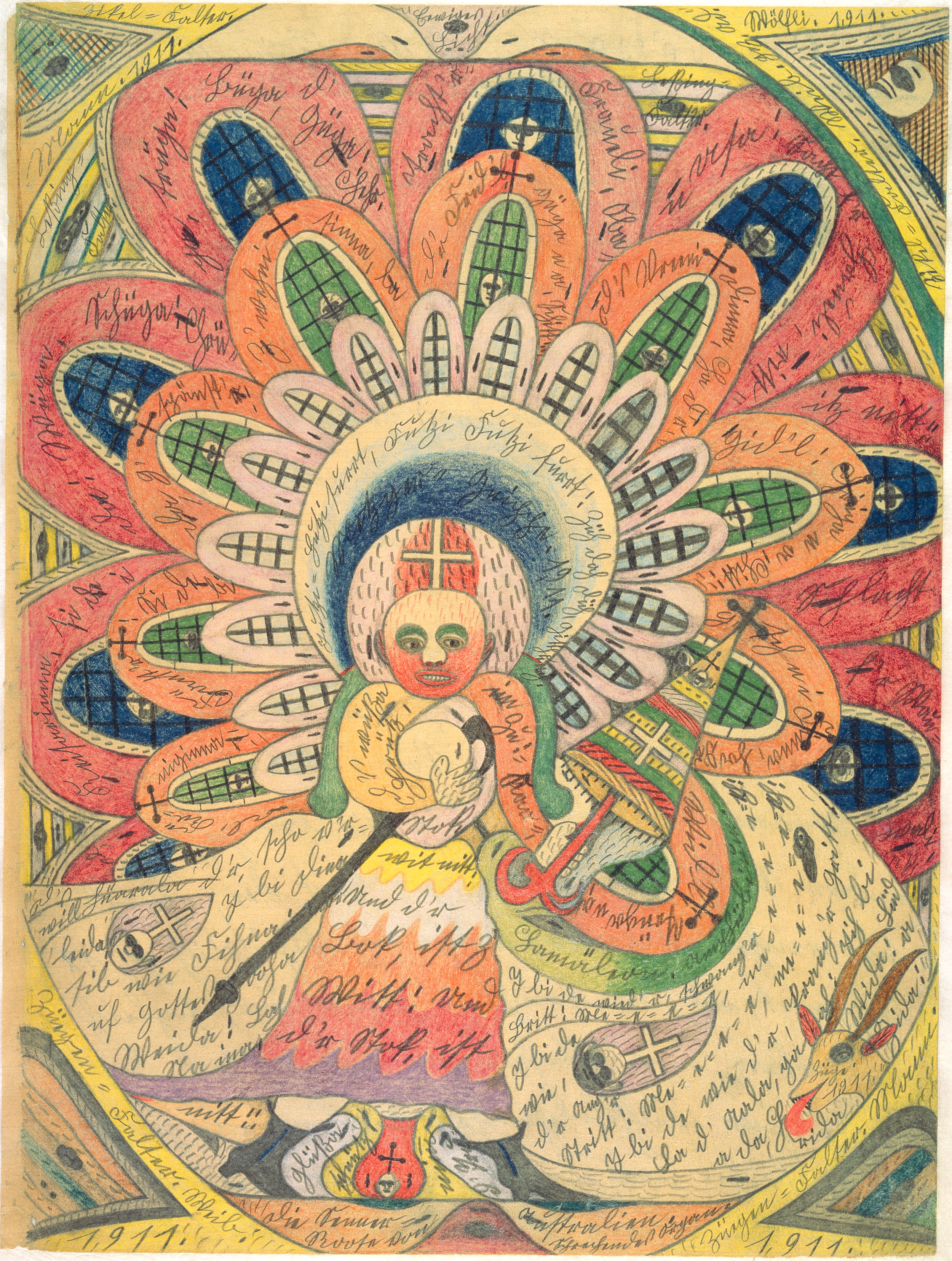
2.8
Die Senner=Rose von Australien. Sprechendes Organ, 1911, Bleistift und Farbstift auf Zeitungspapier, 49,9 × 37,5 cm, A 9243–51 (IV/p.361)
Aus: Von der Wiege bis zum Graab, Heft 4, S. 361
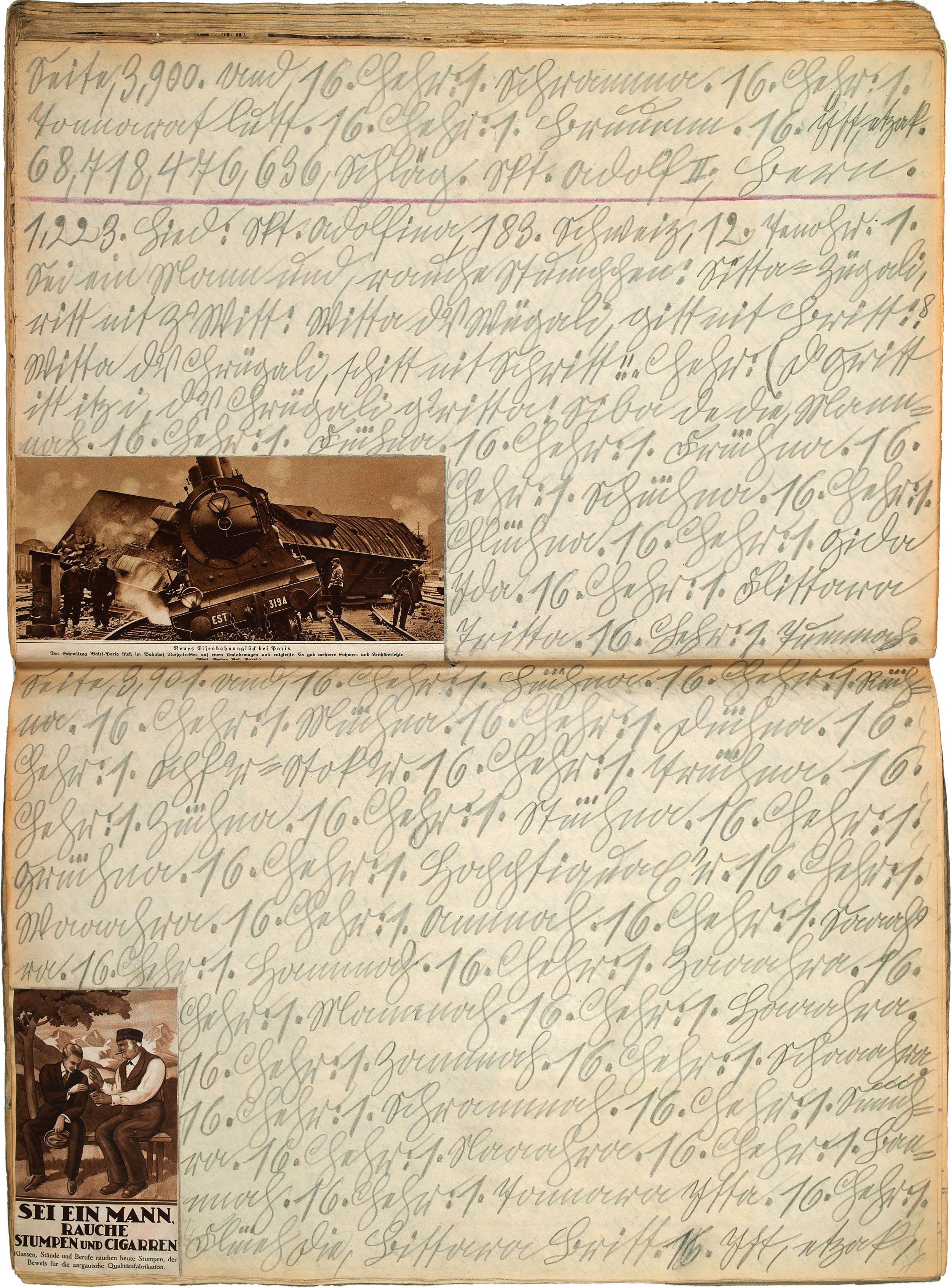
6.5
Ohne Titel, 1929, Bleistift, Farbstift und Collage auf Zeitungspapier, 70 × 50 cm, A9403, S.3900
Aus: Trauer=Marsch, S. 3900
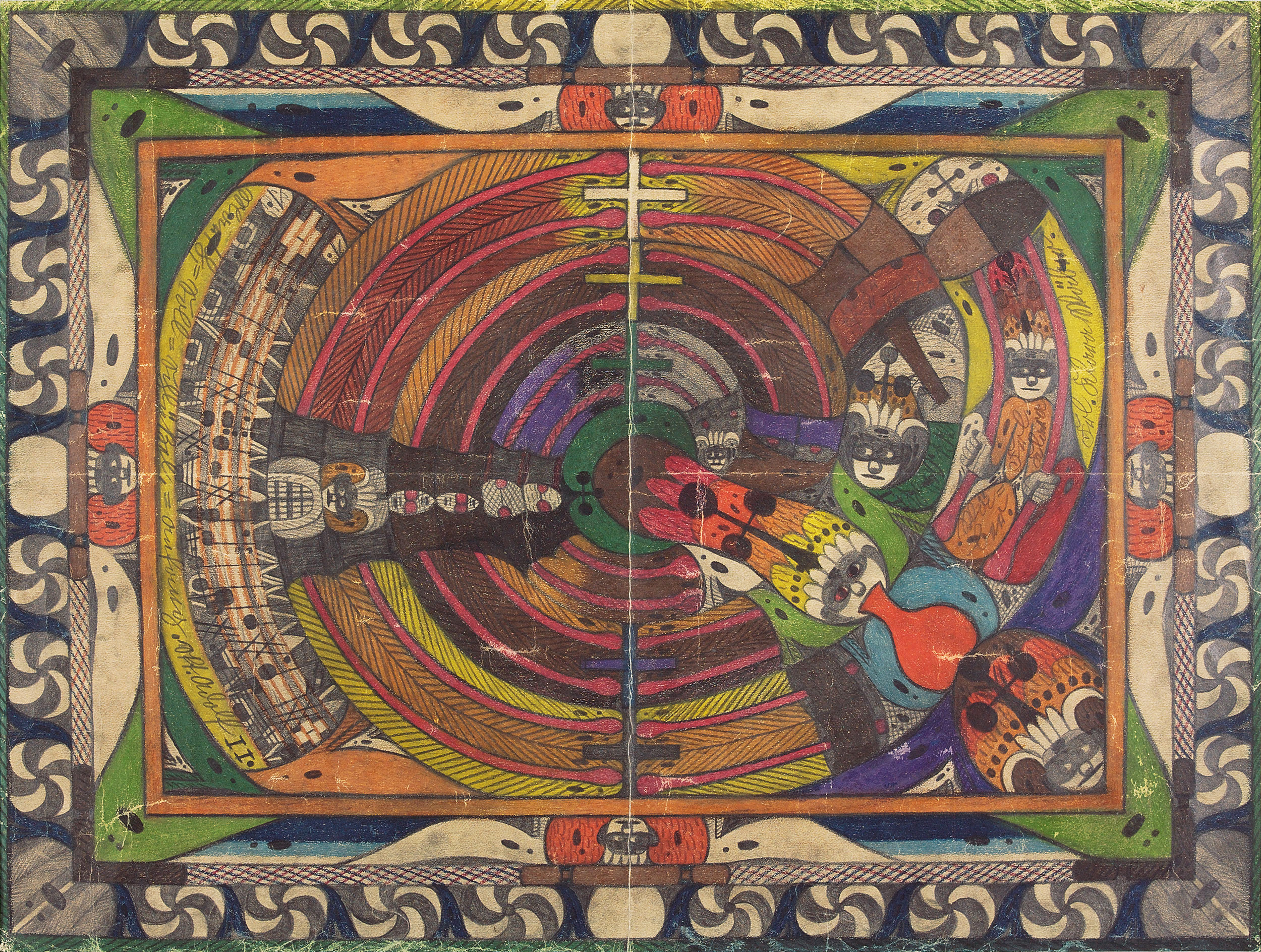
7.9
Die Führ=Hamm'r=Schlange, 1921
Bleistift und Farbstift auf Papier, 51,4 × 68,1 cm, A 9346
Aus: Brotkunst
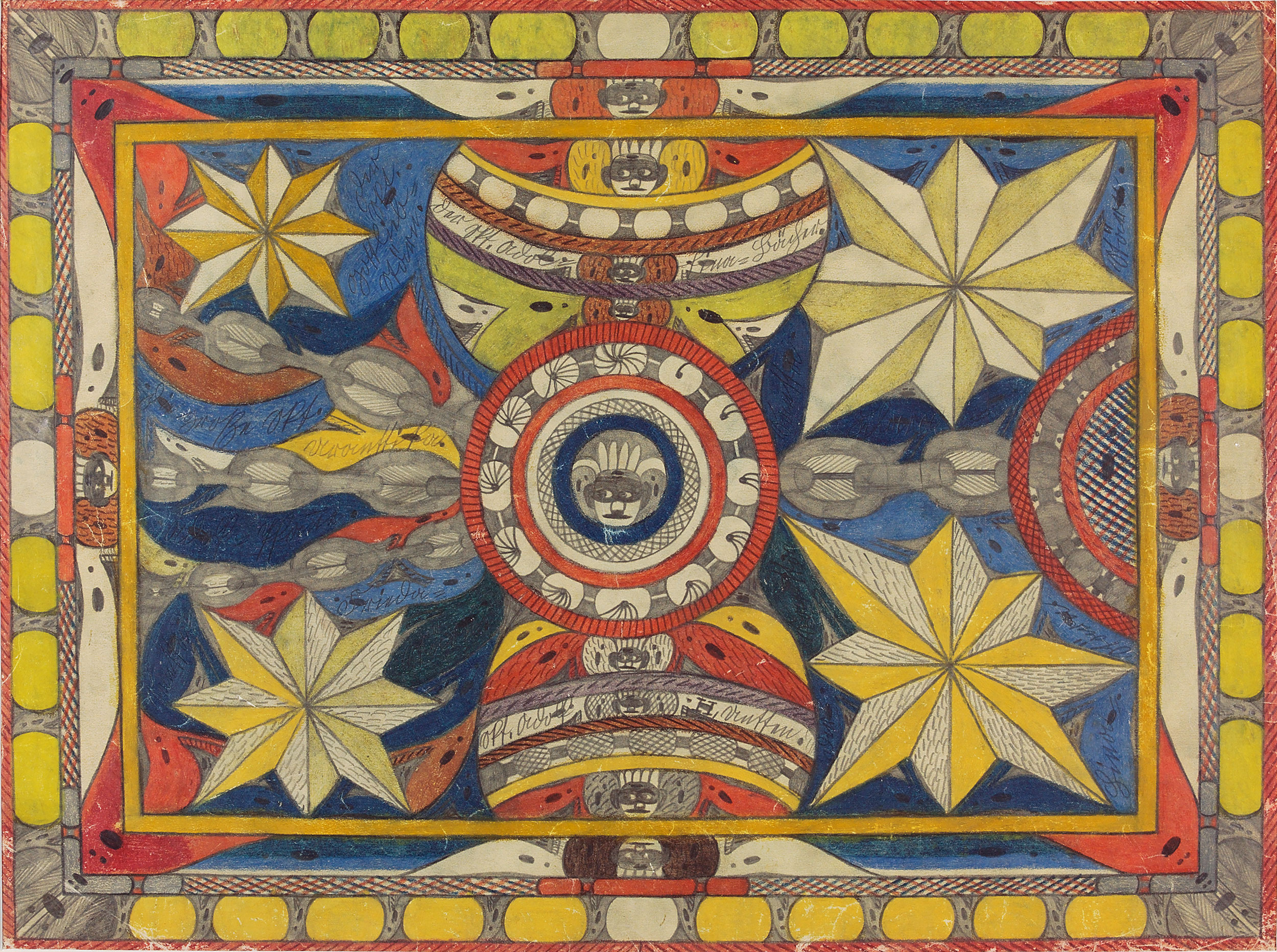
7.4
Riesen=Blitz mit Allmacht=Riesen=Kette, 1919, Bleistift und Farbstift auf Papier, 51,2 × 68,0 cm, A 9312
Aus: Brotkunst
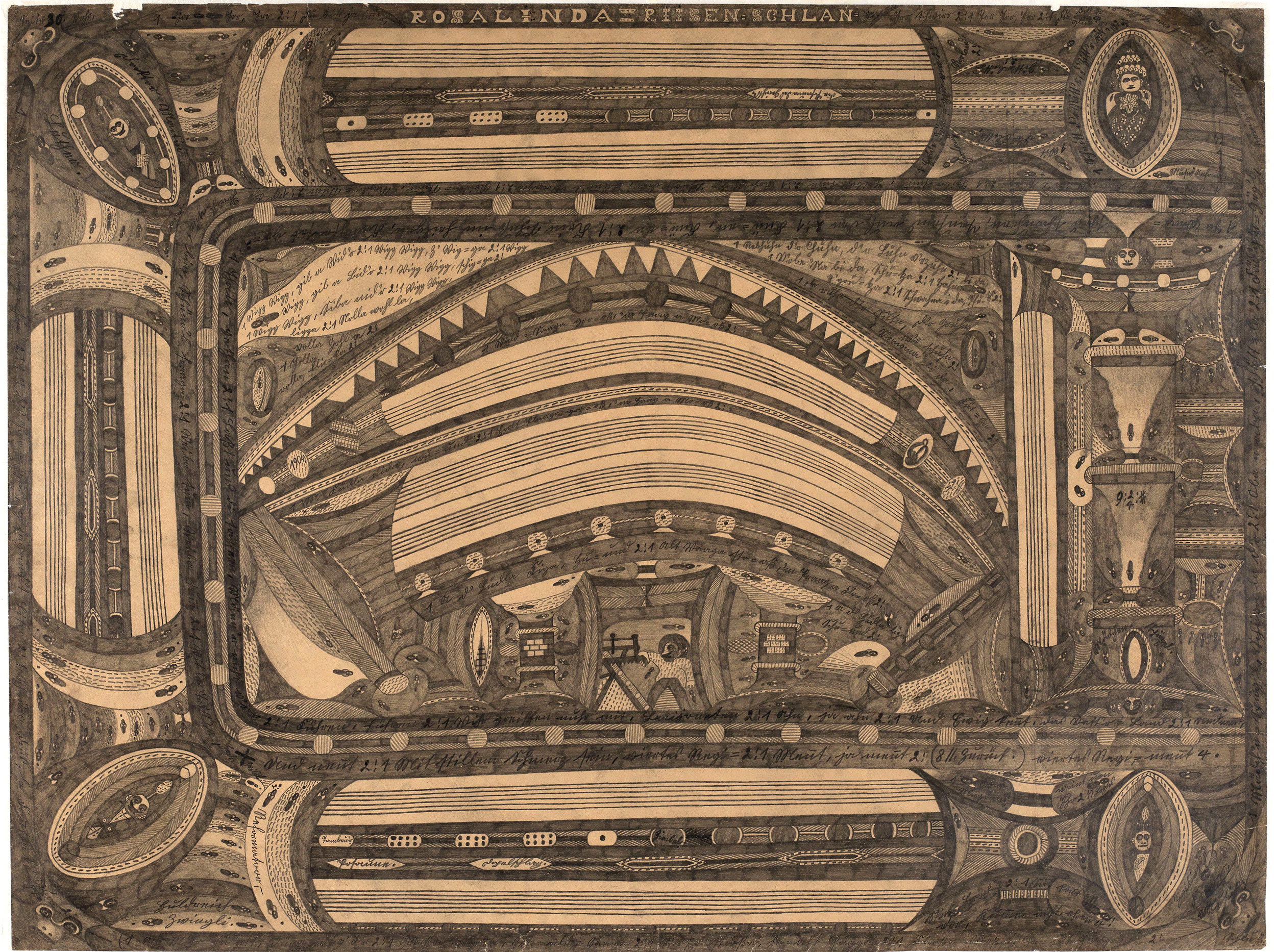
1.7
Rosalinda=Riisen=Schlange. Seite 30, 1904, Bleistift auf Zeitungspapier, 74,7 × 99,6 cm, A 9212
Aus: Frühe Zeichnungen
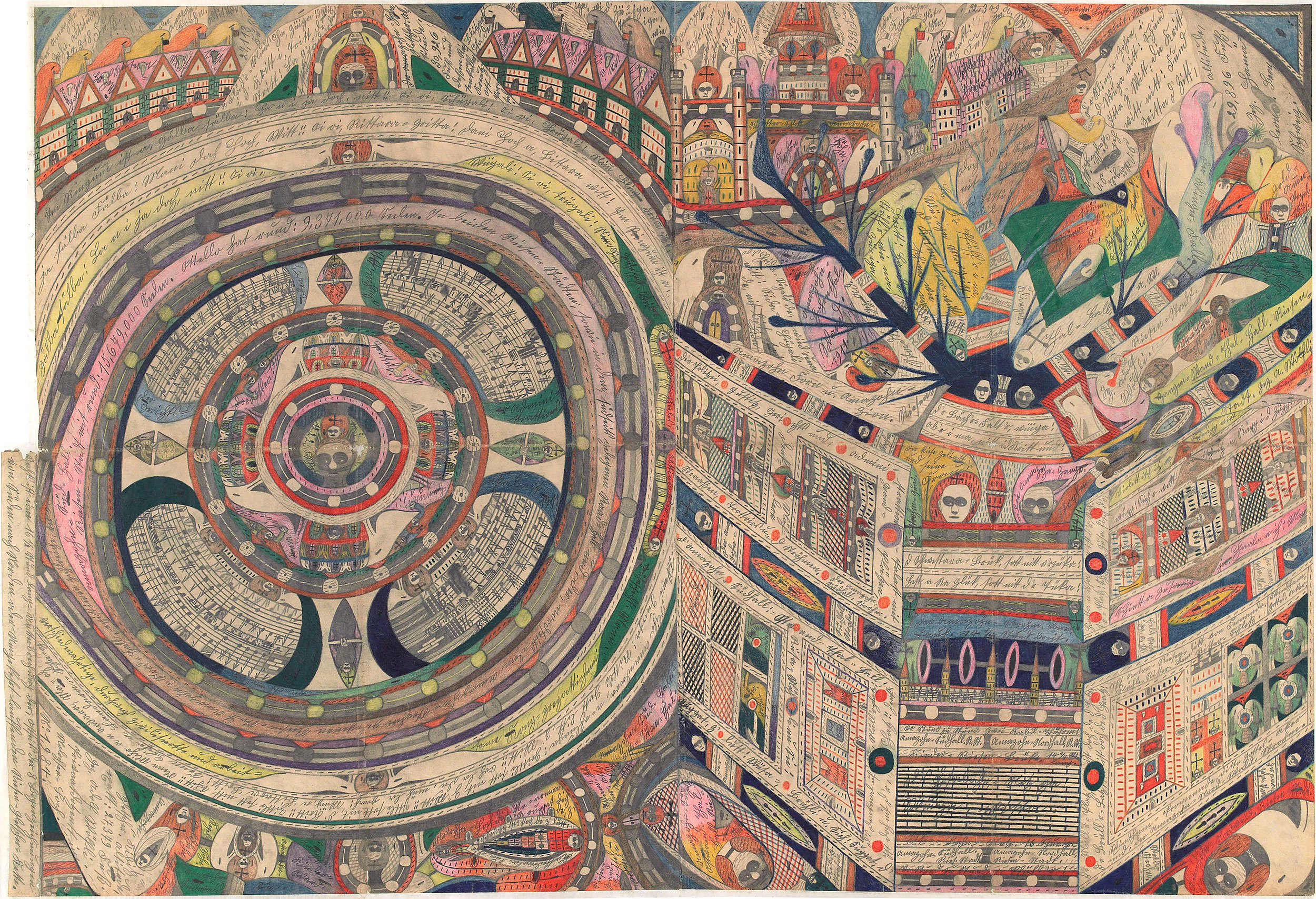
2.2
Der Amazohn=Strom und Amazohn=Hall, 1911, Bleistift und Farbstift auf Zeitungspapier, 99,5 × 146,5 cm, A 9243-79 (IV/p.409–410)
Aus: Von der Wiege bis zum Graab, Heft 4, S. 409–410
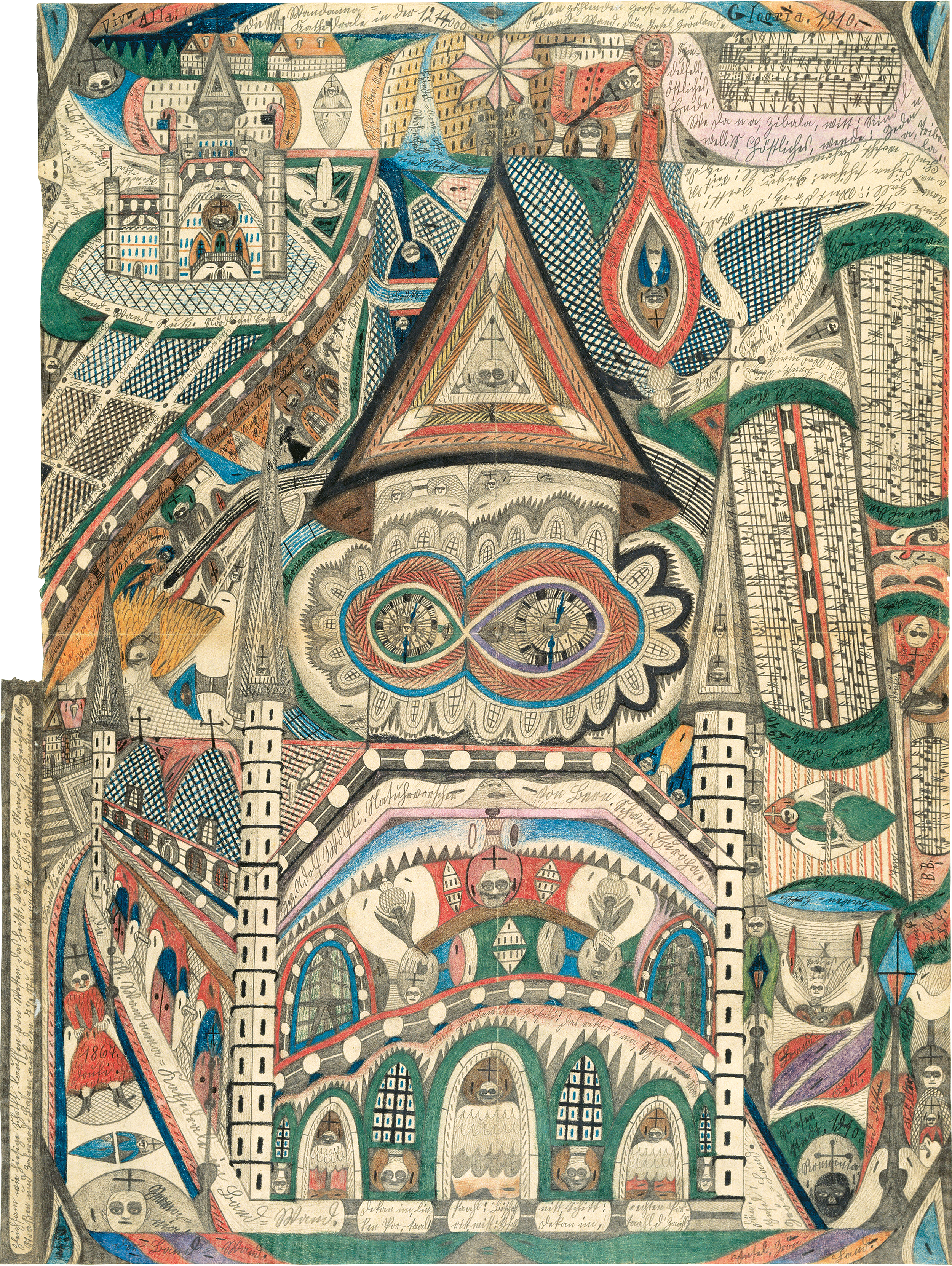
2.4
Die Skt. Wandanna=Kathedrale in Band=Wand, 1910, Bleistift und Farbstift auf Zeitungspapier, 99,5 × 146,5 cm, A 9243-79 (IV/p.205–206)
Aus: Von der Wiege bis zum Graab, Heft 4, S. 205–206
2.6
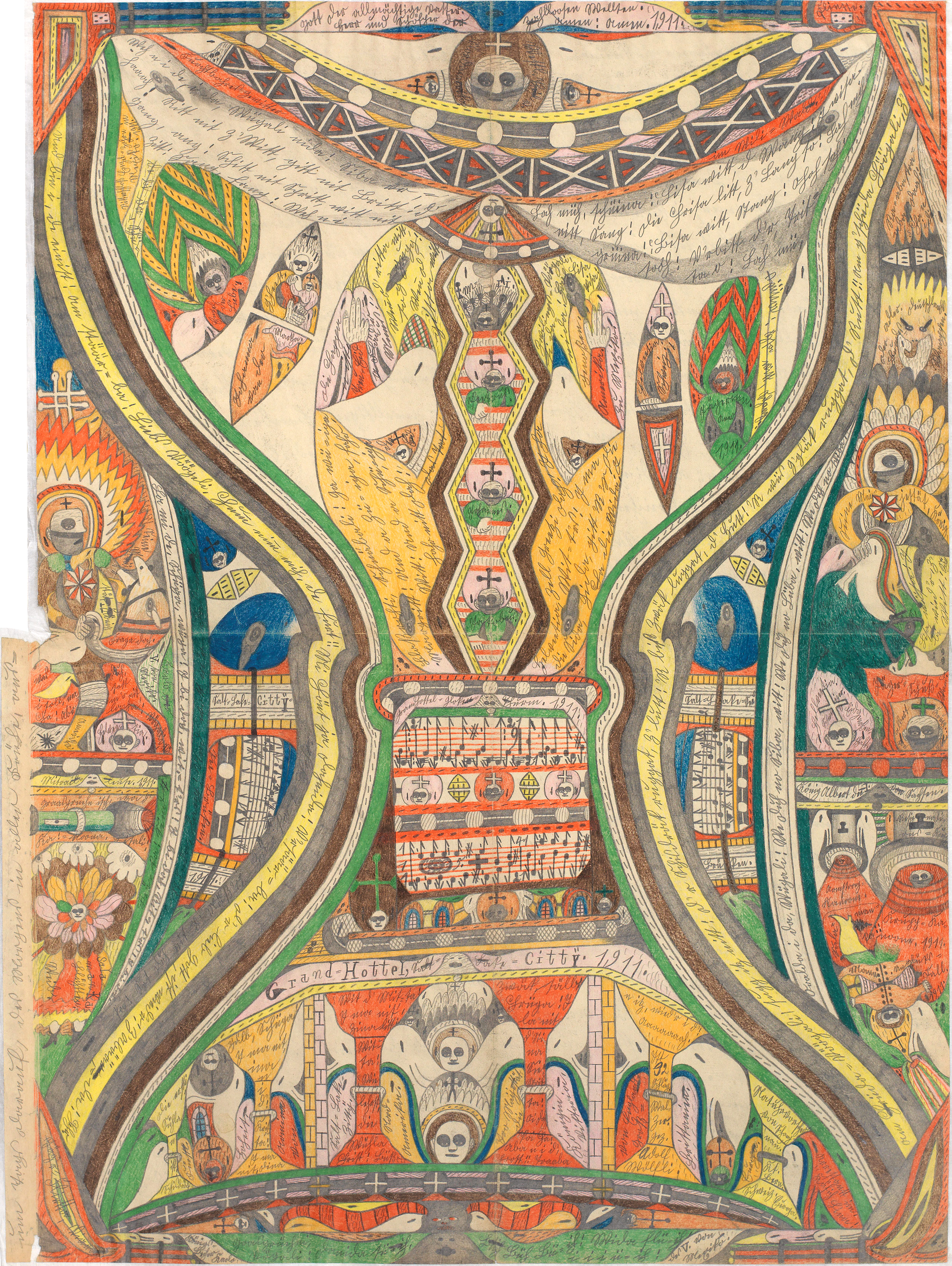
Grand=Hottel, Salt=Lake=Citty, 1911, Bleistift und Farbstift auf Zeitungspapier, 99.7 × 72.2 cm, A 9243-48 (IV/p.341–342)
Aus: Von der Wiege bis zum Graab, Heft 4, S. 341–342
3.1
Die Kreutzigung des heiligen Skt. Adolf auf der Haven=Insel von Biskaya, im stillem Ozean. 1,876, 1914, Bleistift und Farbstift auf Zeitungspapier, 71,3 / 72,6 × 100.5 cm, A 9253-104 (XII/p.529–530)
Aus: Geographische und allgebräische Hefte, Heft 12, S. 529–530
6.9
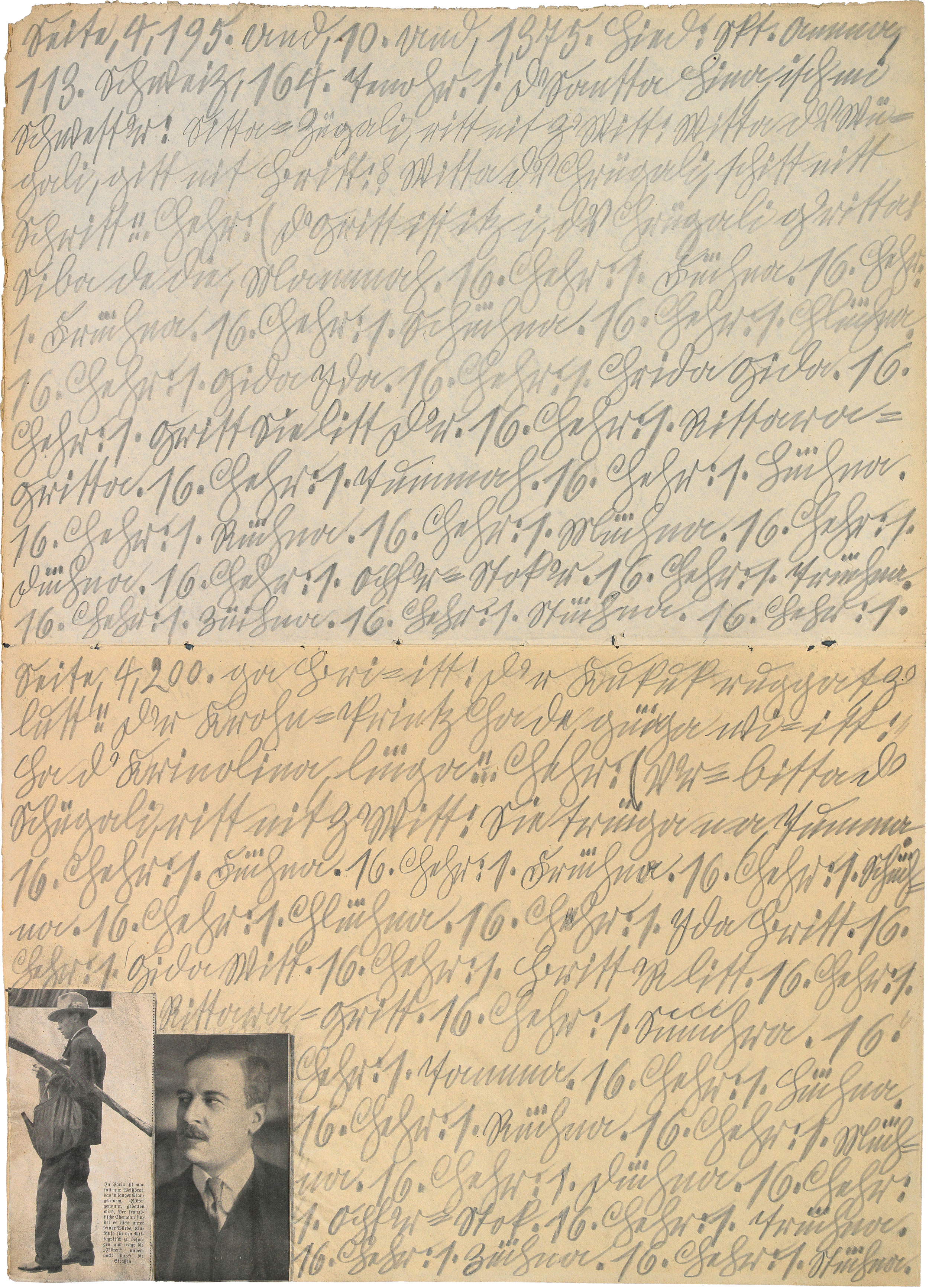
Ohne Titel (Paris / Porträt eines Mannes), 1929, Bleistift und Collage auf Zeitungspapier, 70 × 50 cm, A9404, S.4200
Aus: Trauer=Marsch, S. 4200
6.7
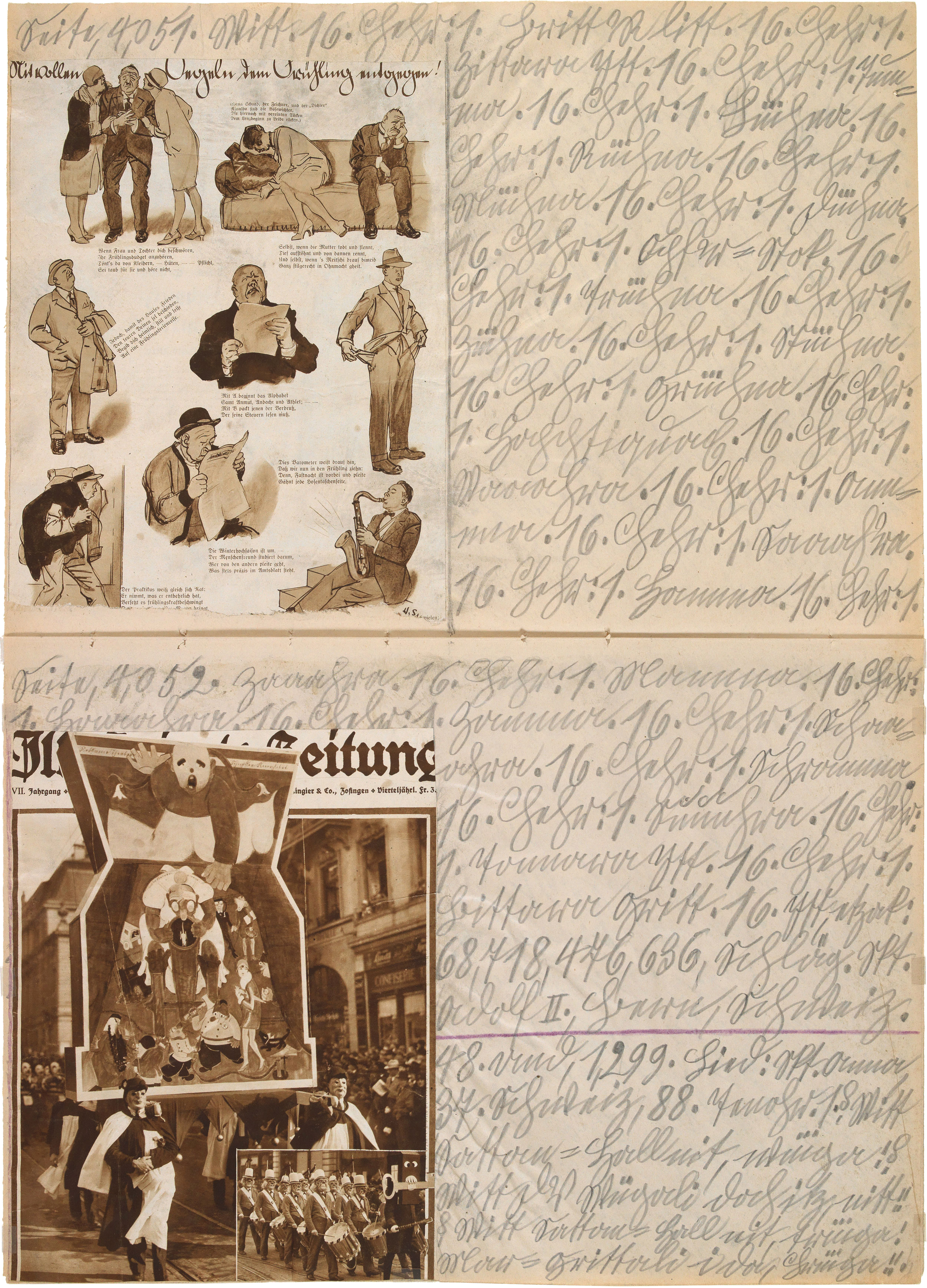
Ohne Titel, 1929, Bleistift, Farbstift und Collage auf Zeitungspapier, 70 × 50 cm, A9404, S. 4051
Aus: Trauer=Marsch, S. 4051
